Fall Living Room Decor: 20 Cozy Ideas for a Warm 2026 Refresh
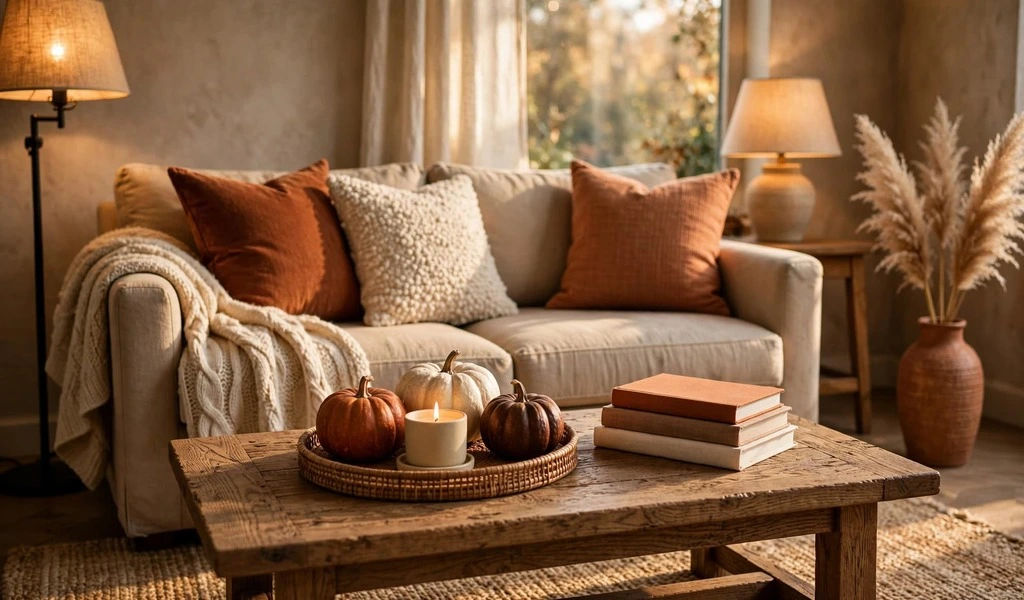
Fall living room decor is easy to get wrong. You add a few pumpkins, a plaid blanket, maybe a candle, and somehow the room looks more decorated without actually feeling any cozier.
The better approach is to look at what your living room is missing first. Maybe the lighting feels harsh after sunset. Maybe the sofa still looks like summer. Maybe the coffee table is already crowded, so adding more seasonal pieces would only make it worse. Or maybe you simply don’t like orange and don’t want your home to look like a fall display.
This guide takes a different approach. Instead of giving you 20 versions of “add a pumpkin,” these are 20 ways to solve a specific fall-decorating problem. Some cost nothing. Some take five minutes. A few involve buying something, but only when that purchase can keep working after fall.
 A fall living room can feel warm through lighting, texture, and a few carefully chosen details rather than a complete makeover.
Before You Buy Anything, Look Again
Stand in the doorway of your living room and ignore the fact that you’re decorating for fall. What bothers you about the room right now?
Is it too bright? Too empty? Too cold-looking? Too cluttered? Does the seating feel disconnected? Does one corner look unfinished? Does everything have the same smooth texture?
That answer matters more than the season.
If the room feels cold because of the lighting, another pumpkin won’t solve it. If the coffee table is already packed, another tray won’t help. If the sofa feels flat, changing the artwork may not be the best first move.
Start with the problem, then choose the fall detail that solves it. That one change keeps seasonal decorating from turning into unnecessary shopping.
What Actually Makes a Room Feel Like Fall?
A fall room isn’t defined by pumpkins. It usually feels seasonal because several quieter things are working together: warmth in the light, richer color, tactile materials, natural elements, and a sense of comfort around the seating area.
You don’t need all of them. A mostly neutral living room might need only warmer lighting and one darker accent. A colorful room might already have enough warmth and simply need softer textures. A small room may need less decoration rather than more.
Think of fall as a change in atmosphere, not a shopping category.
20 Fall Ideas That Solve Real Problems
These ideas are deliberately different. Start with the ones that match your room instead of trying to use all twenty.
1. If the Room Still Looks Like Summer, Change One Layer
You don’t have to replace the whole sofa arrangement to make the room feel different. Look for the most visually obvious summer element and change that one layer.
It might be pale blue cushions, a lightweight throw, bright coastal artwork, or very light linen accessories. Replace one of those with something deeper or warmer rather than adding fall decorations on top of everything else.
For example, keep the cream sofa and light rug exactly as they are. Change two cushions to olive and rust, then add one heavier throw. The room still looks like your room, but the visual temperature has shifted.
2. If Your Lighting Feels Harsh, Stop Using the Big Light
One ceiling fixture can make an otherwise comfortable room look flat at night. It lights the whole space equally, including the parts nobody is using.
Instead, switch on the lamp nearest the sofa and another near a reading chair or side table. Leave the overhead light off when you don’t need full-room visibility.
This isn’t just a fall trick. Current fall 2026 interiors coverage is putting more attention on layered, atmospheric lighting and lamps with tactile materials rather than treating the ceiling fixture as the only source of evening light.
3. If You Hate Orange, Don’t Force Orange
There is no rule saying your fall living room has to contain burnt orange.
Try chocolate brown, olive, burgundy, deep green, cinnamon, aubergine, warm cream, or muted clay instead. These colors can give you the depth associated with autumn without making the room look like a seasonal display.
If you’re unsure about committing, use the color in something removable: a cushion cover, throw, vase, artwork, or small upholstered piece.
4. If Your Coffee Table Is Already Full, Remove Three Things
This is one of the easiest changes and one of the most overlooked.
Take everything off the coffee table. Put back only the things you actually use. Then create one small seasonal grouping in the space that remains.
A low bowl, two books, and one ceramic or natural object can be enough. You don’t need a tray surrounded by six little decorations just because the table has empty space.
The empty space is part of the styling.

A restrained coffee-table arrangement leaves enough room for the table to remain useful.
5. If Your Sofa Looks Flat, Change the Texture Before the Color
Sometimes a sofa doesn’t need a new color. It needs something for the eye to notice.
Put a smoother fabric beside a rougher one: velvet with linen, boucle with cotton, wool with leather, or a chunky knit beside a plain cushion. The difference between the surfaces gives the arrangement more depth without requiring a dramatic color change.
This matters especially in neutral rooms where everything is already cream, beige, gray, or white.
6. If Your Room Has No Fireplace, Give the Seating Area a Focal Point
A fireplace naturally gives a living room somewhere for the eye to land. If you don’t have one, you don’t need to fake one with a giant mantel display.
Choose another anchor instead. It could be a large piece of art above the sofa, a tall floor lamp, a console with a simple arrangement, or a well-composed coffee table.
The goal is not to copy a fireplace. It’s to give the room one area that feels intentionally finished.
7. If Everything Looks Too New, Add One Older Piece
A room full of new furniture and matching accessories can look polished but strangely anonymous. One older or thrifted object can break that uniformity.
Look for a brass candlestick, wooden bowl, old frame, ceramic vessel, small stool, or piece of artwork that you genuinely like.
Don’t build an entire vintage corner around it. Let one older-looking object sit beside newer things. That contrast is what makes it feel collected rather than themed.
This fits the broader fall 2026 shift toward more personalized, collected rooms rather than interiors where everything looks as if it was bought at the same time.
8. If Your Neutral Room Feels Flat, Add One Deep Accent
Neutral doesn’t have to mean pale.
If your room is mostly cream, taupe, beige, or light gray, introduce one deeper shade rather than five new colors. Chocolate brown is an easy choice, but deep green, burgundy, aubergine, or olive can work too.
Use that color in two places so it feels intentional. A burgundy cushion paired with a small burgundy-toned artwork detail will usually feel more connected than putting ten burgundy objects around the room.
9. If a Corner Is Doing Nothing, Give It a Job
That empty corner beside the sofa doesn’t necessarily need a decorative tree.
Ask what the room actually needs. If the corner is dark, put a floor lamp there. If blankets are always left on the sofa, use a basket. If someone likes to read there, create a small reading spot with a chair and light.
For more ideas on making awkward corners useful rather than simply filling them, see our guide to cozy reading nooks for different corners of the home.
10. If Your Shelves Already Look Busy, Don’t Add Fall Decor
Fall shelves often become crowded because people add pumpkins, leaves, candles, books, signs, and vases without removing anything first.
Instead, take away two or three objects and replace one with a seasonal piece. You could swap a pale ceramic for a darker one, replace a summer print with a botanical image, or add a small branch arrangement while leaving the rest alone.
A seasonal change should be visible. It doesn’t need to occupy every inch of the shelf.
11. If You Want a More Expensive Look, Work With Materials
You don’t need expensive decorations to make a fall room feel considered. What often makes a difference is the relationship between materials.
Try combining warm wood with linen, ceramic with woven fiber, leather with wool, or aged metal with a soft textile. The contrast gives simple objects more visual interest.
This is one reason current 2026 interiors are leaning so heavily into tactile, mixed-material rooms: the room gains depth without depending entirely on more objects or brighter colors.
12. If Your Small Living Room Feels Crowded, Decorate by Replacing
Small rooms have a very simple problem: there isn’t much spare visual or physical space.
So don’t start by adding.
Replace. Take off two summer cushions before putting on two fall cushions. Remove the decorative bowl before adding a small seasonal arrangement. Move a basket rather than buying another storage piece.
If furniture placement is the bigger problem, solve that first with our guide to small living room furniture spacing and proportions.
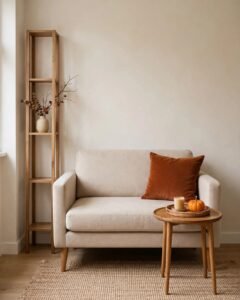
In a compact room, one focused seasonal area is often enough.
13. If Your Modern Room Feels Too Cold, Keep the Shapes Clean
You don’t have to make a modern living room rustic just because it’s fall.
Keep the clean furniture and introduce warmth through material instead. Try a dark wood object, textured cushion, sculptural ceramic, warmer artwork, or a richer rug.
A modern room can still feel seasonal without plaid pumpkins, artificial leaves, or a shelf full of miniature decorations.
14. If You Want Fall Without Looking “Decorated,” Use Nature
Branches, dried stems, seasonal fruit, wood, stone, and ceramics tend to feel less obviously seasonal than novelty decorations.
A few branches in a simple vase can bring height to a console. A bowl of apples or pears can give a coffee table a seasonal color note. A wooden bowl can bring warmth to a pale room without announcing itself as “fall decor.”
The room gets the seasonal feeling without every object explaining the season.
15. If Your Room Has Too Many Straight Lines, Soften One Area
Modern sofas, rectangular coffee tables, shelves, and square artwork can make a room feel visually rigid. Fall is a good time to introduce one softer shape.
Try a round tray, curved ceramic vase, rounded lamp base, circular mirror, or an organically shaped bowl. You don’t need to replace the furniture. One curved object can interrupt a room full of hard edges.
16. If You Keep Buying Seasonal Decor, Buy Something That Stays
Before buying another object that will disappear into a storage box in December, ask whether the item would still make sense in January.
A good lamp, wood tray, neutral throw, ceramic vase, useful basket, or piece of artwork can work across several seasons. You can then add one inexpensive seasonal element around it.
That approach is especially useful if you’re decorating on a budget because you’re building the room rather than rebuilding it every few months.
For more low-cost seasonal ideas, see our guide to cozy fall home decor ideas on a budget.
17. If You Love Pattern, Mix It Instead of Matching It
One plaid pillow is the obvious fall move. A more interesting approach is to look at the patterns already in your room.
If you have stripes, try a small check in the same color family. If you already have botanical artwork, a subtle organic pattern can make sense beside it. Keep the colors related even when the patterns differ.
Current fall 2026 design coverage is giving more attention to layered patterns and rooms that feel collected rather than perfectly matched. You don’t need to go maximalist to borrow the idea; even two related patterns can make a room feel less predictable.
18. If the Sofa Area Feels Disconnected, Pull It Together
Sometimes the room doesn’t need more decoration. The furniture simply isn’t reading as one seating area.
Check whether the chairs are close enough to participate in conversation, whether the rug visually connects the pieces, and whether a lamp or table gives the group a reason to feel connected.
A warmer fall look becomes much easier once the seating area itself feels comfortable. If your room has an unusual layout, you may also find useful ideas in our small living room decor guide.
19. If You Want a Seasonal Centerpiece, Keep It Low
A centerpiece shouldn’t make you lean around it to talk to someone.
For a coffee table, use a low bowl, shallow tray, short arrangement, or a small cluster of objects. If you want height, move the taller element to a console or side table where it won’t interrupt the seating area.
This is a small detail, but it makes seasonal decorating feel like part of a usable home rather than something arranged only for a photograph.
20. If You Don’t Want to Redecorate Again in November, Skip the Theme
This is perhaps the most useful fall decorating decision: don’t make every item specifically about fall.
Use warm colors, wood, textured fabrics, ceramics, books, branches, and softer lighting as your foundation. Then add one or two unmistakably seasonal pieces if you want them.
That way the room can move from September to November without looking like yesterday’s trend. You can also add a small Halloween layer later without rebuilding the entire living room; our Halloween home decor guide covers that more specific transition.
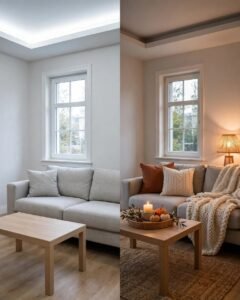
A few deeper colors and warmer textures can change the mood without replacing the whole room.
How to Get a Cozy Fall Look Without Clutter
There is a point where cozy stops feeling cozy.
If every surface has a candle, pumpkin, basket, vase, book, sign, and branch arrangement, your eye has nowhere to rest. The room may contain more “fall” than before, but it won’t necessarily feel more comfortable.
Try working in layers instead:
- Foundation: keep your existing furniture and larger pieces.
- Atmosphere: adjust the evening lighting.
- Texture: add one or two tactile materials.
- Color: introduce one deeper or warmer accent.
- Seasonal detail: add one small display or natural element.
Then stop and look at the room again.
If it already feels finished, you don’t get extra points for adding another pumpkin.
Neutral Fall Decor Can Still Feel Rich
Neutral fall rooms are often treated as if they have to be beige from floor to ceiling. They don’t.
The trick is to create contrast without relying on bright color. Pair cream with chocolate brown. Put warm wood against pale upholstery. Add a rough woven material beside something smooth. Use clay or cinnamon as a small accent rather than making it the entire palette.
If you already have a neutral room, you may not need to buy anything specifically labeled “fall.” Changing the relationships between the things you own can be enough.
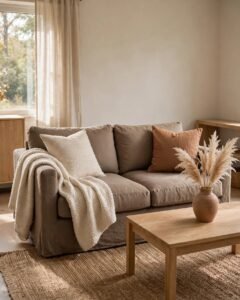
Neutral colors can feel distinctly autumnal when the materials and lighting become warmer.
What Feels Different About Fall 2026?
There isn’t one color or decorating style that defines every fall room in 2026. The more useful change is the move toward rooms that feel personal, layered, and collected rather than perfectly coordinated.
Current fall 2026 design reporting highlights richer colors such as jewel tones, chocolate, cinnamon and other deeper shades, along with warm wood, natural materials, mixed patterns, antique or vintage elements, and more layered spaces. The emphasis is less on making every item match and more on creating a room with character.
That gives you an important choice: you can follow the direction without copying a trend literally.
| If your room looks like this… | Try this fall direction |
|---|---|
| Mostly cream and beige | Add chocolate, olive, burgundy, or cinnamon in small amounts |
| Modern and minimal | Use one richer material or sculptural object instead of many decorations |
| Traditional and already detailed | Layer patterns and let one vintage piece stand out |
| Small and visually busy | Remove before adding and keep one seasonal focal point |
| Very cool-toned | Introduce warm wood, warmer light, or a warmer textile |
The important part is that the trend should serve the room. If a 2026 idea makes your living room less comfortable or less useful, you don’t need it simply because it is fashionable.
Three Fall Looks You Can Build
The Quiet Fall Room
Keep the large furniture neutral. Add warm lamp light, one textured throw, two darker cushions, and a small branch arrangement. Use cream, taupe, olive, and wood rather than bright orange.
This works particularly well if you want the room to transition easily into winter.
The Richer Fall Room
Start with one deeper color such as chocolate, burgundy, cinnamon, or deep green. Repeat it in two or three small places rather than covering the entire room with it.
Add warm wood and one patterned textile. Let the rest of the room stay relatively quiet.
The Collected Fall Room
Keep the furniture you already own, then mix one vintage object, one natural material, one patterned textile, and one personal object such as a favorite book or piece of art.
This is less about “decorating for fall” and more about making the room feel like it has accumulated a little more character over time.
Fall Living Room Mistakes That Are Easy to Make
- Adding instead of editing. If a surface is already crowded, remove something before putting fall decor there.
- Using one fall color everywhere. Repeating rust, orange, or brown in every corner can make the room feel staged.
- Ignoring the room after dark. A living room can look beautiful during the day and completely different at night. Check your lighting before judging the rest of the decor.
- Buying a matching seasonal set. Matching pieces can make a room look temporary. A few different materials and shapes usually feel more natural.
- Making every surface seasonal. Leave some areas quiet. Your eye needs somewhere to rest.
- Choosing pieces that don’t fit the room. An oversized pumpkin, giant garland, or bulky basket can overwhelm a small space.
- Decorating for a photograph instead of daily life. If you have to move the centerpiece every time someone wants to sit down, it isn’t helping the room.
- Changing things that were already working. Your sofa, rug, artwork, or furniture doesn’t become wrong just because fall arrived.
Fall Living Room Decor FAQs
How can I make my living room feel like fall without using pumpkins?
Start with lighting, texture, and color. Use warmer evening light, add a wool or boucle textile, bring in warm wood or ceramic, and introduce one deeper color such as olive, chocolate, burgundy, or cinnamon. Branches, seasonal fruit, books, and natural materials can provide seasonal character without obvious pumpkin decorations.
What are the fall colors for 2026?
There isn’t one required fall palette. Current 2026 interiors coverage is showing richer shades alongside traditional autumn colors, including chocolate, cinnamon, burgundy, aubergine, emerald and other deeper tones. Warm neutrals still work well, especially when combined with richer accents or natural materials.
How do I decorate a small living room for fall?
Use a replace-rather-than-add approach. Change a few pillow covers, introduce one throw, create one small focal point, and keep walkways and major surfaces clear. If the furniture itself is taking up too much space, fix the layout before adding seasonal accessories.
How can I make a modern living room cozy for fall?
Keep the clean furniture and introduce warmth through material rather than clutter. Dark wood, textured fabrics, warm ceramics, richer colors, softer lighting, and one sculptural seasonal object can shift the atmosphere without making the room look rustic or overly themed.
How can I decorate for fall on a tight budget?
Start with things you already own. Rearrange books, use branches, restyle an existing tray, change a few pillow covers, and move lamps closer to the seating area. If you buy something, prioritize an item that can remain useful after fall, such as a lamp, throw, basket, ceramic vase, or wood tray.
When should I put up fall living room decor?
Whenever it feels right for your home. Early September gives you a longer fall season, while waiting until the weather changes can make the transition feel more natural. If you use mostly non-holiday-specific pieces, you can keep them through November without the room feeling stuck in one particular date.
Your Living Room Doesn’t Need a Fall Makeover
The most convincing fall living rooms usually aren’t the ones with the most decorations.
They’re the ones where the changes make sense.
A darker cushion works with the rug. The lamp makes the sofa more inviting after sunset. A wooden bowl warms up a pale coffee table. One old frame gives the newer furniture some character. A throw is actually within reach instead of folded perfectly for a photograph.
Start there.
Look at the room you already have, decide what feels missing, and make one change that solves it. If the room feels warmer afterward, you probably don’t need five more things.
That’s the point of a fall refresh: not making your living room look like fall, but making it feel better to live in during fall.