20 Sage Green Living Room Ideas That Feel Calm (2026)
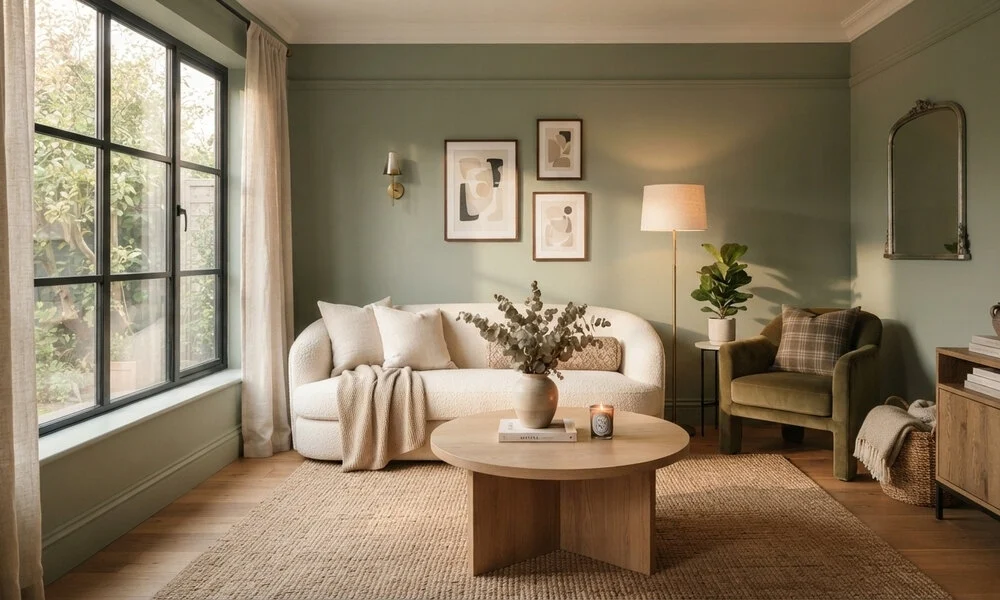
You’ve probably seen the same sage green living room forty times on Pinterest by now. Pale walls, cream sofa, one fiddle-leaf fig by the window. Nice room. Not the only room this color can build though.
Here’s the part nobody warns you about. Someone picks a sage swatch that looks perfect on their phone, rolls it onto the wall, and by six in the evening it’s gone flat and gray instead of warm and calm. Sage shifts more than almost any other paint color depending on the light hitting it, and most guides skip straight past that.
This roundup of sage green living room ideas covers both halves: twenty ways to bring the color into a living room, and the small handful of things that decide whether it looks intentional or like a mistake.
Quick answer: if you only take one thing from this list, test your actual paint sample on the wall at three different times of day before you decide. Everything else here is about where to put the color once you’ve picked the right shade for your room.
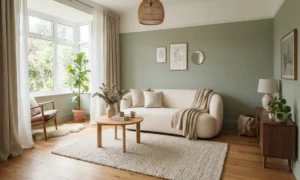
Why This Particular Green
Green usually announces itself. Walk into a room with kelly-green or emerald walls and that’s the first thing you notice, every single time, even a year later. Sage doesn’t behave that way. It’s pulled so far toward gray that most people clock it as a neutral before they clock it as a color at all.
That’s basically the whole appeal, and it’s why sage green living room ideas keep showing up everywhere right now. A living room is supposed to be somewhere you unwind, not somewhere the wall competes for attention. Sage gets to keep some warmth without the loudness a true green brings with it.
One catch. A north-facing room with cooler, indirect light tends to push sage further toward gray than you’d expect from the paint chip. A south-facing room with strong afternoon sun does the opposite and warms it toward olive. Same can of paint. Two completely different rooms. This is the part that separates a living room that looks planned from one that looks like a paint mistake nobody caught in time.
Test It Properly First
Skip the photo-on-your-phone test. Cameras correct color automatically, which has nothing to do with how the paint will actually sit on your wall, and sage is one of the worst colors for this gap because it’s already sitting right between green and gray to begin with.
A few real, findable options if you want somewhere to start:
- Sherwin-Williams Clary Sage (SW 6178) – soft, gray-leaning, close enough to neutral for a full room in most lighting.
- Sherwin-Williams Evergreen Fog (SW 9130) – deeper and smokier. Better on a single wall than four, especially in a room that’s already a bit dim.
- Benjamin Moore October Mist – warmer and more muted, and one of the most popular green picks of the last few years for that exact reason.
Get an actual sample pot. Paint a strip at least two feet wide and check it in the morning, at midday, and again after dinner, because the color that looked perfect at 9am can look like a different paint entirely by evening. We go into more depth on how paint color changes a living room’s whole feel in our guide to living room paint colors, if you want the longer version.
Wall Treatments
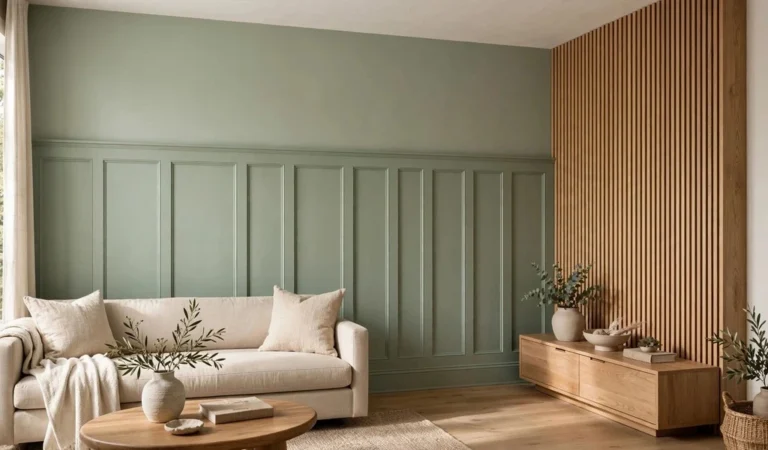
All four walls in a pale, gray-leaning sage is the option for someone who’s already decided. Because that particular shade sits so close to neutral, most of what you already own (wood furniture, black metal, cream fabric) tends to work with it without a full overhaul. Skip this one if the room doesn’t get much daylight. Four walls of a dim sage can end up looking duller than planned.
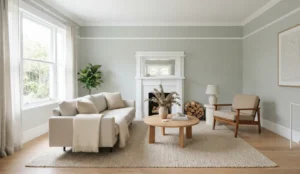
Painting just the wall behind the sofa is probably the most common version of this whole trend, and for good reason. It anchors the seating area. Gives your eye something to land on. If you end up hating it, it’s one wall and an afternoon, not a whole renovation.
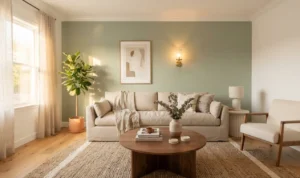
Got built-in shelving or a fireplace surround? Paint just that section. A smaller, architecturally defined area carries color without asking the whole room to hold it, and honestly it makes whatever’s sitting on those shelves look more curated than it probably is.
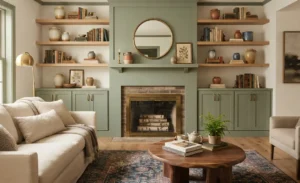
Sage on the bottom third of the wall, white or off-white above it. Old trick, still works. Good for renters limited to part of a wall, and good for small rooms where a full-height sage can start feeling like it’s closing in on you.
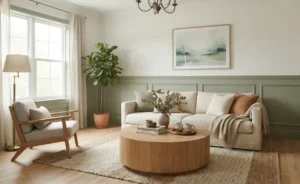
Furniture and Upholstery
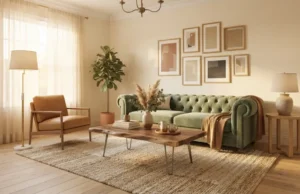
Let the sofa carry the color instead of the walls. Keep everything else neutral and put the color into the biggest single piece of furniture in the room. This tends to feel calmer than a sage wall, mostly because a sofa doesn’t wrap around you on four sides the way paint does. Add a jute or wool rug and something in warm wood so it doesn’t look like the sofa’s floating in an empty white box.
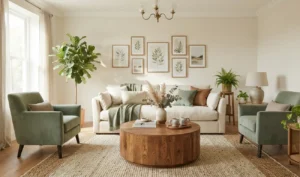
Two sage armchairs flanking a plain cream or beige sofa gets you most of the color with a fraction of the risk of a full sage sofa. And chairs are just easier to swap out later if you get tired of them. A three-seat sofa reupholster is a much bigger project than two chairs, so this is usually the lower-stress way to test the color at furniture scale.
Tan or cognac leather next to sage keeps things from tipping into overly soft, overly cottage-y territory. It’s really a texture contrast more than anything else. The leather brings a little edge that an all-upholstered room doesn’t have, which matters if the rest of your sage green living room decor already leans soft and layered.
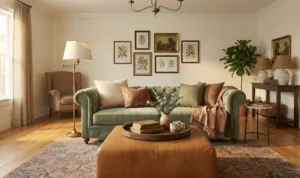
Not ready for a sofa? Start with one chair in the corner. Cheapest way to actually live with the color for a few months before deciding whether you want it anywhere bigger.
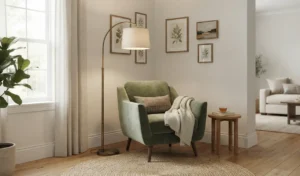
Textiles and Soft Layers
Three sage pillows on a sofa you already own is the cheapest entry point on this entire list, full stop. Mix textures, one linen, one velvet, and the room already looks different. No paint, no new furniture, nothing to undo if you change your mind next month.
Curtains cover more of a room’s visual space than people give them credit for. A soft sage linen panel does something paint can’t, either: it softens the actual light coming through the window, so the whole room’s mood shifts a little depending on the time of day. This is one of the fastest ways to bring calming living room colors into a rental without touching a single wall.
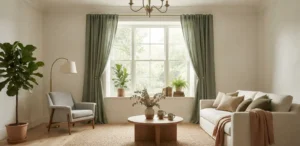
Pick a rug with a sage undertone woven through it rather than a solid sage rug. It grounds the room without introducing a second block of color to compete with everything else, and it hides everyday wear a lot better than a plain cream rug ever does.
A chunky knit throw draped over one arm of the sofa. That’s it. Cheap, temporary, and the one item on this whole list you can return without any consequence if it turns out you don’t love it.
Wood, Brass, and Natural Materials
Sage walls paired with white oak furniture is one of the more current combinations showing up in living rooms right now. Pale wood is cool enough to balance out sage’s warmth, and the contrast between the two tends to hold up better over time than pairings built around a single trend.
A brass lamp base. A few picture frames. Maybe a curtain rod. Two or three brass touches is usually the right amount, because past that number the room starts looking like a themed vintage-brass-and-sage set instead of somewhere a person actually lives.
A rattan pendant light or a woven side table adds texture that keeps a sage-heavy room from feeling flat. One or two rattan pieces does the job. Five starts to feel like a theme, and it’s the difference between a farmhouse living room that feels collected over time and one that feels like it was bought as a matching set last weekend.
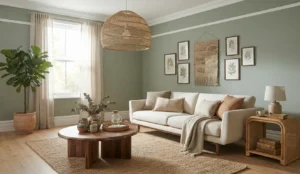
If you want this to lean modern instead of farmhouse-adjacent, bring in stone or a concrete-look fireplace surround. Cooler materials pull sage toward its grayer side, away from the more rustic version of this trend that shows up in most galleries. Both directions are valid sage green living room ideas — it really comes down to whether the rest of your furniture already leans warm and rustic or cool and streamlined.
Small Rooms and Rentals
Peel-and-stick sage wallpaper gets you close to a painted wall without touching the actual wall. Double check your lease first, though. Some buildings are stricter about “removable” products than the packaging lets on.
In a small living room, paint just the reading nook or alcove instead of everything. Adds color without eating into how big the room feels, which four full sage walls can absolutely do in a tight space.
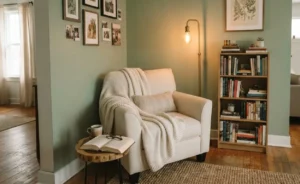
A vase. A stack of books. A ceramic lamp base. If you’re somewhere temporary or just not ready to commit to anything permanent, this is genuinely the entire move, and every piece of it packs up and moves with you.
Small or dim room? Let white and cream handle the walls and the big furniture, and put sage only in a rug, a chair, a pillow. Keeps the room bright while you still get the color somewhere in the mix. This is usually the best starting point for anyone still deciding how much sage their space can actually handle.
Two Mistakes People Keep Making
Testing on a phone screen instead of an actual wall sample. Already covered this above but it deserves repeating, because it’s the single most common regret people mention after painting — a color that looked muted and gray-green on screen can turn noticeably more yellow or more blue once it’s actually on plaster or drywall.
Stacking sage next to two or three other saturated colors at once and hoping it all just works out. Sage does best as either the main color in a room or a quiet supporting one. Not fighting a mustard chair and a terracotta rug for attention in the same square footage. If you’re building out a full neutral living room palette, sage usually needs to be the loudest color in the room, not one of several.
Questions People Actually Ask
Will this make my small living room feel smaller? Depends entirely on where you put it. Four walls in a small, dim room can feel closing-in. The same color on one wall, in an alcove, or just scattered through accessories tends to add depth instead of shrinking anything.
What actually goes with sage green? Warm white, cream, tan leather, white oak, brass. All of those sit close enough to neutral that they let the sage do the work instead of competing with it. Want something cooler and more modern? Charcoal and stone work too.
Does sage green work in a farmhouse living room? Yes, probably better than in most other styles. Farmhouse living rooms already lean on natural wood, woven textures, and muted tones, and sage slots into that palette without needing much else to change.
Is this going to look dated in two years? Nobody can promise that about any paint color, honestly. What sage has going for it is that it behaves more like a neutral than a bold statement color, and muted, gray-leaning colors generally age better than saturated ones. Generally.
Can renters do any of this without painting? Yes. Pillows, curtains, a rug with sage running through it, a throw blanket. None of it needs a landlord’s permission.
Pick one thing off this list before trying all twenty. A rug, three pillows, one wall, whichever feels closest to something you’d actually use this week. These sage green living room ideas work best when you start small and build from whatever you actually end up liking, not from the whole list at once. For more living room color ideas, the full Living Room category has more.