Wall Paneling Ideas for Every Room: Styles, Materials & DIY Tips
Wall paneling can add texture, character or a little protection to a plain wall. The right choice depends on your room, budget, wall condition and how much detail you want to live with. This guide compares popular styles, materials and panel heights, then walks through practical options for bedrooms, living rooms, bathrooms and small spaces.
What is wall paneling?
Wall paneling is a layer of boards, panels or decorative trim fitted to a wall. It can cover part or all of the surface, adding a pattern, texture or visual frame. Some paneling also helps protect walls from everyday scuffs, but decorative panels are not a fix for damp, damaged or uneven walls.
Is wall paneling a good idea?
It can be, if the style suits the room and you’re prepared for the cost and upkeep. Paneling can make a plain wall feel more finished and can give a room a focal point. It may also add edges, grooves and corners that collect dust, and poor layout can make a room feel busy. Fix moisture or structural problems before covering a wall.
The best wall paneling ideas to try
There isn’t one best style for every home. Start with the look you want, then check whether the material, panel height and cleaning needs suit the room.
Board-and-batten wall paneling
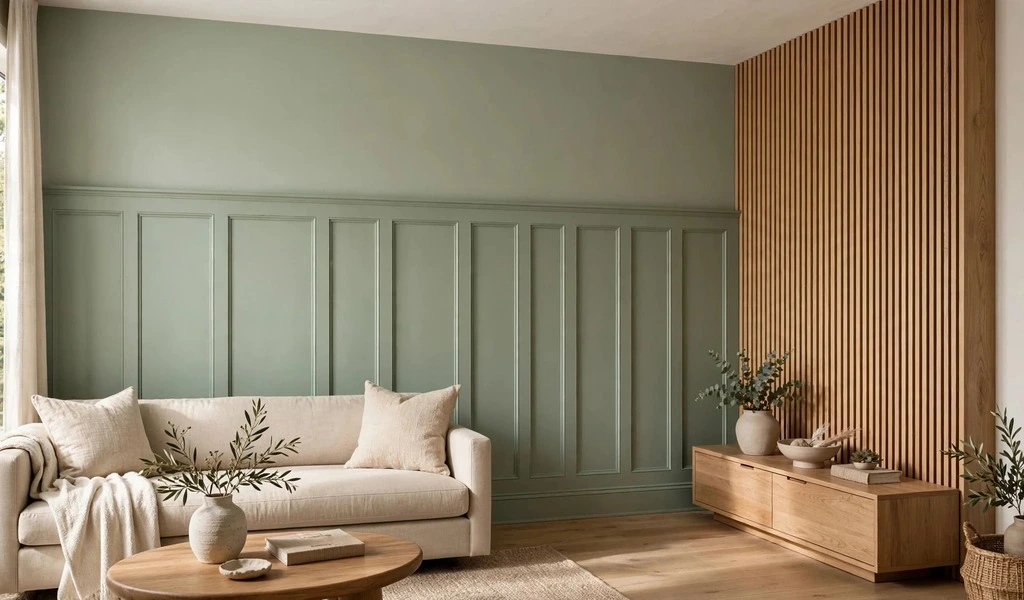
Board and batten uses vertical strips, or battens, over a flat wall or backing. It creates a clear rhythm of narrow panels and works as lower-wall wainscoting or as a full-height feature.
Choose it for: hallways, dining rooms, bedrooms and simple accent walls, especially in farmhouse, cottage or transitional interiors.
Why it works: The design is easy to understand and paint. The vertical lines can draw the eye upward.
Watch out for: Uneven spacing, awkwardly narrow end panels and trim that clashes with existing baseboards or door casings. A full-height wall can feel repetitive if the battens are very close together.
For a lower-wall treatment, mock up the top rail with painter’s tape before cutting anything. The best height depends on the room, not a fixed measurement.
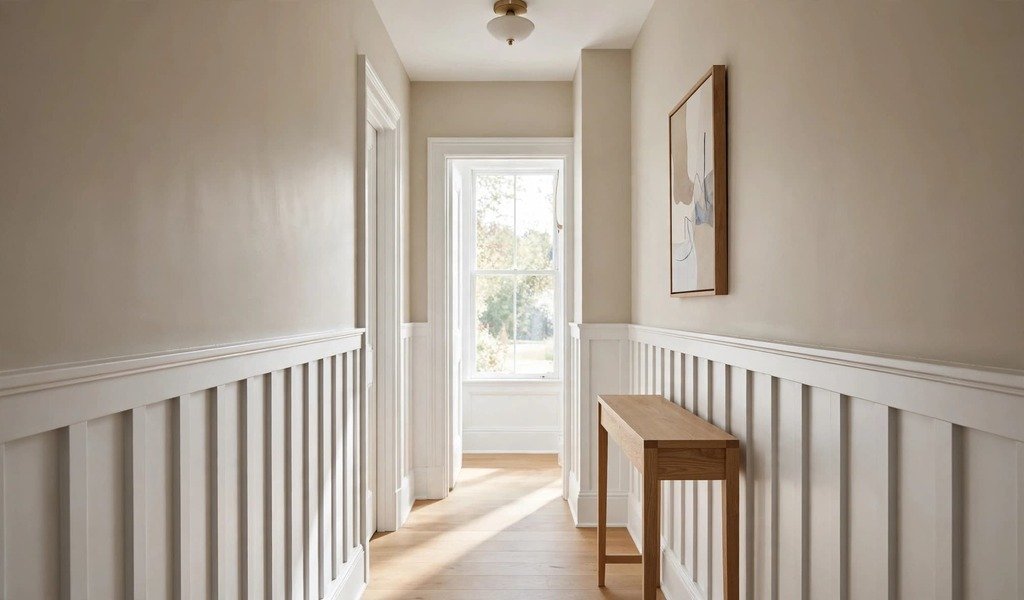
Wainscoting ideas
Wainscoting is a broad term for paneling fitted to the lower part of a wall. It can use flat panels, raised panels, beadboard, board and batten or decorative molding. A chair rail or dado rail often marks the top edge, but it doesn’t have to.
Choose it for: rooms where you want a finished lower wall without covering the whole surface. It’s a natural fit for entryways, dining rooms and traditional homes.
Traditional version: Raised panels and detailed molding suit rooms with other classic features.
Modern version: Flat panel wainscoting with square, simple trim feels cleaner. Painting the wall, panels and trim one color can make it feel less formal.
Watch out for: Adding elaborate molding to a room that already has ornate trim, busy wallpaper or strong floor patterns. Too many lines can compete.
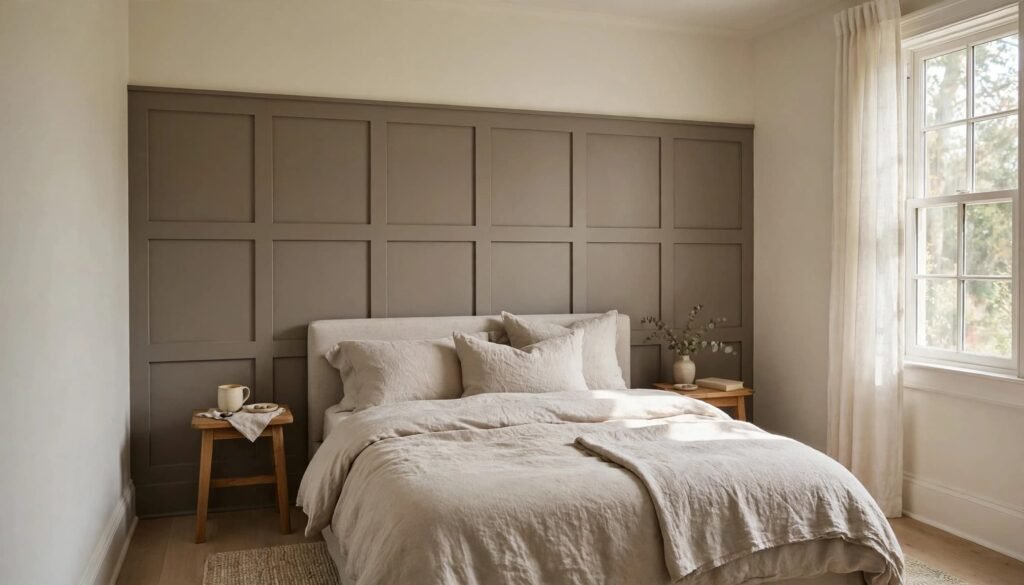
Shaker wall paneling
Shaker panels use simple rectangular frames, often with a flat center. The look is more structured than plain painted walls but less ornate than raised panels.
Choose it for: bedrooms, dining areas and living rooms where you want a quiet, architectural finish.
Why it works: It suits both traditional and modern spaces, depending on the frame size, paint color and surrounding furniture.
Watch out for: Making the frames too small or numerous. In a compact room, fewer, larger rectangles can feel calmer than a grid of tiny boxes.
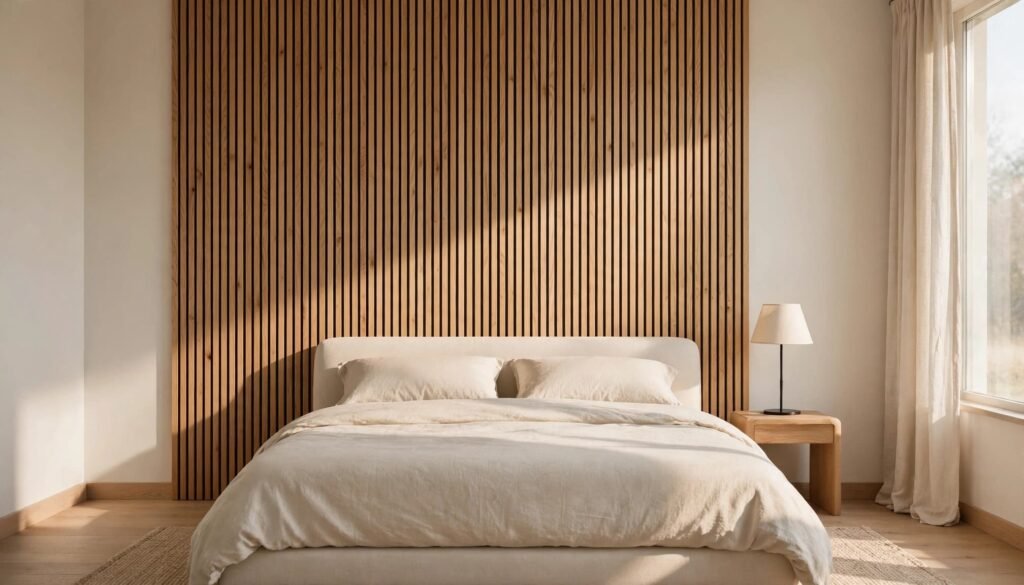
Fluted and slat wall paneling
Slat walls use raised strips with gaps or dark grooves between them. Fluted panels have repeated rounded or squared channels across the surface. Both add texture, but slats create more pronounced lines, while fluting often reads as a softer, continuous pattern.
Choose slats for: a modern feature wall, a media wall or a headboard backdrop.
Choose fluting for: a more subtle textured surface, such as a living-room feature or a wall behind a console.
Why it works: Vertical lines can emphasize a wall’s height and add texture without framed rectangles.
Watch out for: Dust in grooves, especially with open slats. The finish and spacing affect how easy a panel is to clean. Check the product’s care instructions before buying. If you want a low-maintenance surface, a flatter design may be a better fit.
Beadboard paneling
Beadboard has narrow vertical grooves, or “beads,” that form a repeating pattern. It can be installed as individual boards or as larger sheets designed to resemble them.
Choose it for: cottage-style rooms, mudrooms, porches and lower walls in a bathroom outside direct water exposure, provided the material and finish suit the conditions.
Why it works: Sheet beadboard can cover a wall more quickly than fitting many separate boards. It’s also a familiar choice for a cottage or coastal look.
Watch out for: Visible seams and a less custom appearance on some sheet products. Check the pattern and edge detail before purchasing, and plan how sheets will meet at corners.
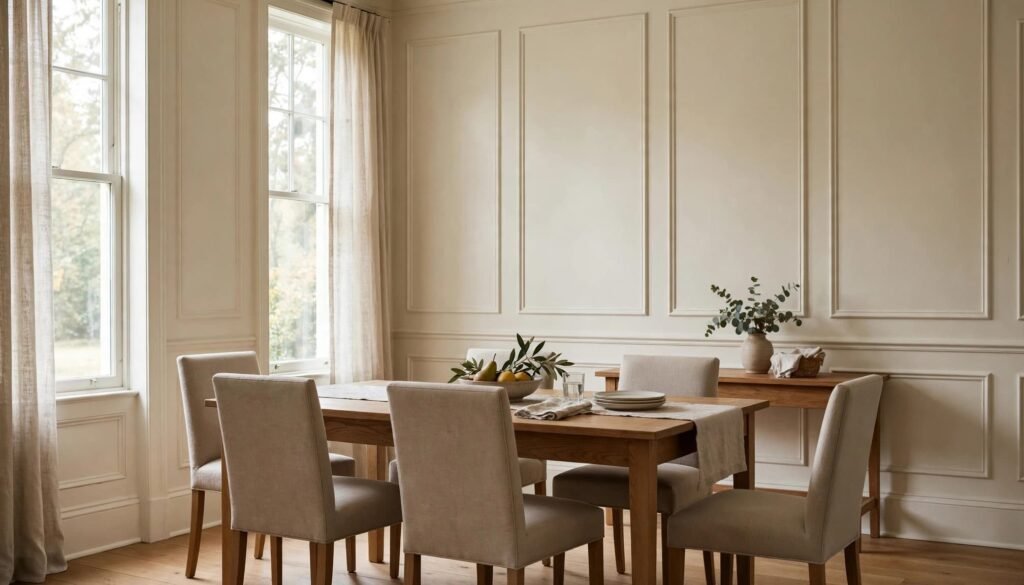
Picture-frame molding
Picture-frame molding uses strips of decorative trim to create rectangles directly on the wall. It can sit low as wainscoting or continue across a full wall.
Choose it for: dining rooms, bedrooms and living rooms that need subtle detail without thick panels.
Why it works: The trim can be painted to match the wall, so it adds shadow and shape without introducing a second color.
Watch out for: Frames that collide with switches, door casings or furniture. Draw the complete wall elevation, including openings, before fixing the trim.
Shiplap and tongue-and-groove
Shiplap boards overlap or fit together to create horizontal lines. Tongue-and-groove boards interlock at their edges and can be installed vertically or horizontally.
Choose them for: cottages, cabins and rooms where you want a board-based look. Vertical boards can emphasize height; horizontal boards can help a narrow wall feel broader.
Watch out for: Using a strong board pattern on every wall. It can dominate a room, particularly when the boards are wide, deeply grooved or high contrast.
These styles are related but not identical. Check the actual profile and installation method rather than relying on a product’s marketing name.
3D and textured wall panels
Three-dimensional panels use raised or recessed shapes to create shadows. Patterns range from quiet geometric lines to bold repeating shapes. Some are made from MDF or other engineered materials; others use different substrates.
Choose them for: a single accent wall where the pattern has room to stand out.
Watch out for: A high-contrast, sculpted pattern behind busy furniture, art or wallpaper. The texture itself becomes a strong visual feature.
Acoustic and upholstered panels
Acoustic panels are designed to absorb sound, and upholstered panels add a soft, padded surface. Their performance depends on the specific product and installation, so don’t assume that decorative panels will soundproof a room.
Choose them for: media rooms, home offices or a bedroom headboard area, if the product’s care and performance details suit the space.
Watch out for: Fabric can need more careful cleaning than painted trim. Check how the covering is cleaned and whether the product is intended for your use.
Modern wall paneling ideas
For modern wall treatments, keep the pattern simple and choose one main feature. These approaches tend to feel cleaner than heavy trim across every wall:
- Vertical oak slats: Add warmth behind a sofa, bed or TV. Use a restrained area if the room already has strong patterns.
- Fluted panels: Bring texture to an entry wall, media wall or built-in. Pick a groove depth and finish that won’t feel too busy up close.
- Minimalist panel molding: Use a few large, simple frames painted the same color as the wall.
- Full-height painted panels: Cover one wall with clean-lined panels for a strong architectural feature. A single color can keep the pattern from feeling choppy.
- Tonal painted panels: Paint the wall and trim in the same family of color, such as warm cream, soft sage or muted blue.
- Dark modern panels: Deep green, charcoal or navy can create a dramatic backdrop. Balance the dark wall with enough light and simpler nearby finishes.
- Media walls with shelving: Pair panels with built-in shelves or cabinets, but plan cable access, ventilation for equipment and the TV mount before installation.
- Concealed doors: Continue panel lines over a door only when the door system and hardware are designed for it. A standard door can’t simply be hidden behind decorative trim.
The simple rule: if the wall already has a TV, shelving, art or a fireplace, keep the panel pattern quiet.
Wood wall paneling ideas: oak, walnut, pine and more
Wood wall panels add natural grain and warmth. The right choice depends on whether you want the material itself to show, plan to paint it, or need a particular level of moisture resistance.
- Natural oak: A flexible choice for a warm, light-toned feature wall or slatted treatment.
- Walnut: A darker, richer grain that can make a room feel more intimate. Use it where the wall has enough light and visual breathing room.
- Pine: Often chosen for a simpler, more relaxed board look. Knots and grain can be part of its character.
- Reclaimed wood: Gives a varied, weathered appearance. Check that the material is suitable, clean and properly prepared for indoor use.
- Wood veneer: A thin real-wood surface bonded to an engineered core. It offers a wood face without using solid wood throughout, but quality, edge treatment and finish vary by product.
- MDF with a wood-look finish: Can provide a consistent pattern, but the look depends on the print or surface finish. Inspect a sample in your room’s light.
- Painted wood: Makes sense when you want the shape of boards or trim, but not a prominent grain pattern.
- Slatted wood: Adds rhythm and a more contemporary feel. Its grooves need more attention when cleaning than a flat panel.
Solid wood, MDF or veneer?
| Material | Look | Relative cost | Maintenance | Best for |
|---|---|---|---|---|
| Solid wood | Natural grain, with variation between boards | Often higher, depending on species and finish | Follow the finish instructions; wood can move with changes in humidity | Visible natural character and long-term repairability |
| Wood veneer | Real-wood surface over an engineered core | Varies by wood and construction | Protect the surface and edges as directed | A wood appearance without solid wood across the full panel |
| MDF panels | Smooth, consistent surface, usually painted | Often a lower-cost paint-grade option | Keep unsealed edges and the panel itself away from unsuitable moisture | Decorative painted trim, frames and dry-room projects |
| PVC panels | Product-dependent surface; often smooth or patterned | Varies by system and finish | Follow the manufacturer’s cleaning and installation instructions | Areas where the specific product is approved for the moisture exposure |
| Beadboard sheet | Repeated grooves in a larger sheet | Often a budget-friendly option | Protect edges and follow the product’s finish guidance | Faster lower-wall or feature-wall treatments |
| Acoustic panels | Textured, slatted or fabric-covered, depending on design | Varies; some are a larger investment | Care depends on the facing and core | Spaces where tested sound absorption is part of the goal |
These are broad comparisons, not quotes. Material, finish, trim, preparation, waste, delivery and labor all affect the installed cost.
When is real wood worth paying for?
Choose solid wood when its grain is a major part of the design, you want a natural material you can refinish, and the room’s conditions suit it. It may not be worth the extra cost if you plan to paint the panels, want a perfectly uniform finish or need to install in an area exposed to moisture.
For a painted look, MDF trim or panels may make more sense. Veneer can be a middle ground, but inspect a sample and check how edges, corners and joints are finished.
Half wall paneling ideas: choose the height, not a fixed rule
A “half wall” doesn’t have to stop at exactly half the wall. People use the term for several lower-wall treatments, from a shorter dado-height feature to a treatment close to mid-wall. The right point depends on windows, furniture, ceiling height and the look you want.
- Lower-third wainscoting: Leaves more open wall above. It can suit traditional rooms and hallways.
- Around mid-wall: Makes the paneling a stronger feature. It can work well behind dining furniture or in a bedroom.
- Three-quarter height: Adds more presence without covering the full wall. Check that it doesn’t cut awkwardly across windows or door trim.
- Full-height panels: Make a stronger statement and can give a wall a more continuous look.
Use painter’s tape to test the top line at a few heights. Look at it from the doorway and beside nearby furniture before committing.
Half-wall paneling paint ideas
- One color across panels and upper wall: Makes the trim feel quieter and more integrated.
- Darker lower section, lighter upper wall: Adds contrast and can make the lower wall feel grounded.
- Tonal monochrome: Use two close shades for a gentle shift in depth.
- Contrasting trim: Makes the panel frames stand out, but can emphasize every line.
- Wallpaper above paneling: Pair a quieter panel style with wallpaper, and check that the patterns and colors don’t compete.
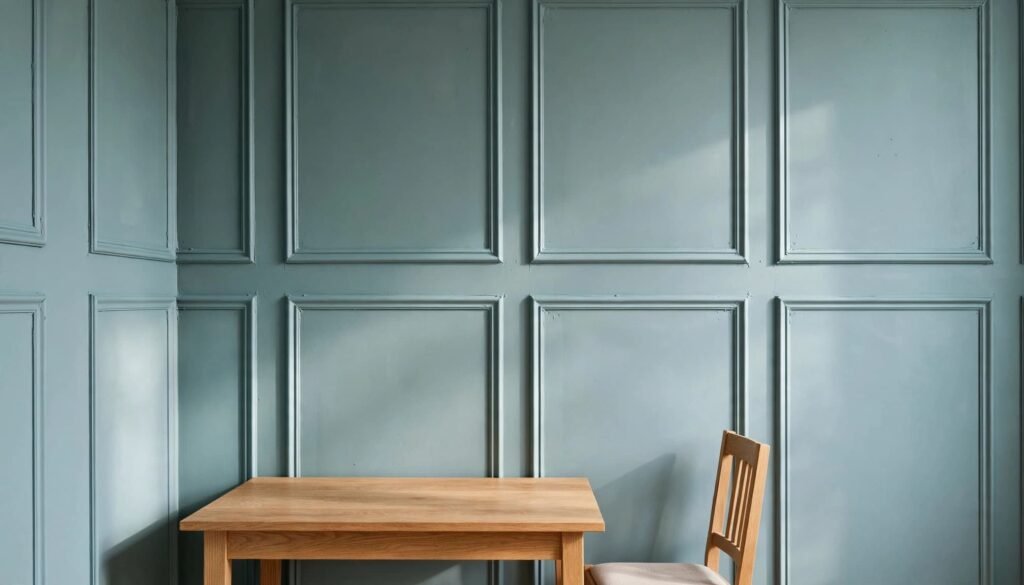
Half-wall treatments work well in hallways, dining rooms, living rooms and bedrooms. In bathrooms, keep decorative wainscoting outside direct water exposure unless the complete panel system is approved for wet use. Half wall wood paneling makeover ideas can be especially effective when the existing wall is sound and you can reuse or coordinate the baseboard and chair rail.
Wall paneling ideas for living rooms
For a living room, decide first whether the panels should frame a focal point or quietly add character.
- TV or media wall: Slats, fluted panels or flat panels can frame a screen. Plan cables, equipment access and the TV’s support before installation. Attach heavy items through to appropriate framing or a suitable support system, not just to decorative paneling.
- Fireplace wall: Use panels only where the material and installation suit the fireplace’s heat and clearance requirements. Follow the fireplace maker’s instructions.
- Sofa feature wall: A quiet board-and-batten, painted frame or slatted treatment can give the sofa a backdrop.
- Half-wall wainscoting: A practical option around high-traffic areas, especially when you want to keep the upper wall plain.
- Traditional molding: Suits a room with other classic details, but scale the trim to the room.
- Dark dramatic paneling: Can create a cozy focal point. Check how it looks in both daylight and evening light.
Don’t panel every wall just because you can. If the room already has a patterned rug, busy curtains, a fireplace and built-ins, one restrained feature wall may be enough.
Wall paneling ideas for a bedroom
The bed wall is often the easiest place to try paneling because it gives the room a natural focal point.
- Behind-bed Shaker panels: A calm, structured backdrop that works in traditional or modern rooms.
- Three-quarter-height panels: Add a stronger feature behind the bed, but check where they sit relative to the headboard and bedside tables.
- Slatted headboard wall: Adds warmth and vertical lines. Think about dusting before choosing narrow grooves.
- Half-wall paneling: Works when you want a softer detail around the room rather than a full feature wall.
- Soft neutral panels: Cream, warm gray, beige or muted green can keep the effect relaxed.
- Dark or moody panels: Deep blue, brown or green can feel cozy. Balance them with lighting, bedding and lighter surfaces.
- Paneling with wallpaper: Use one strong pattern and keep the other quieter. A full wall of both intricate molding and bold wallpaper can feel crowded.
Full-height paneling can feel heavy in a small bedroom or a room with low ceilings, especially in a dark color. Try a large sample, or tape out the panel lines, before deciding.
Bathroom wall paneling ideas
Bathroom paneling needs to suit the amount of water and humidity it will face. A panel that tolerates bathroom humidity isn’t automatically suitable inside a shower.
| Material or finish | Where it may suit | Key caution |
|---|---|---|
| PVC panels | Only where the exact product is approved for that wet area | Joints, corners, cut edges and penetrations must be installed as the manufacturer directs |
| Moisture-resistant MDF | Potentially drier bathroom walls, if the product and finish allow it | It is not the same as waterproof; keep it out of direct water unless the product is specifically approved |
| Painted wood | Drier areas, with a suitable finish and maintenance | Water can reach joints and edges; repair finish damage promptly |
| Tile | Wet zones when installed as a suitable tile system | The whole assembly, including substrate and joints, needs to be appropriate for the location |
| Decorative non-waterproof panels | Dry bathroom walls, away from splashes | Don’t assume a decorative surface is a moisture barrier |
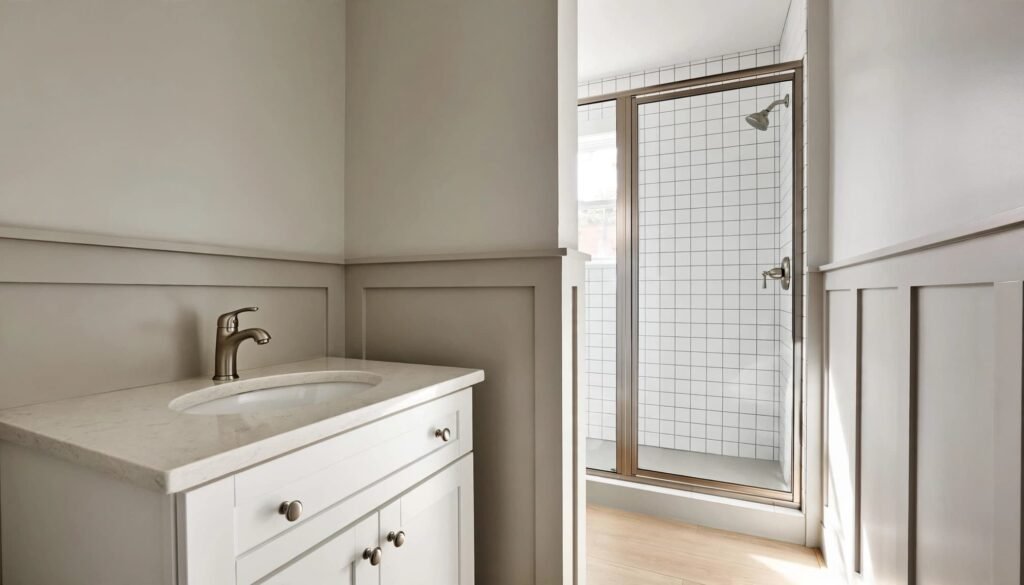
For small bathroom wall paneling ideas, consider a lighter color, a simpler pattern and panels that don’t create lots of tight grooves. Keep any decorative half-wall paneling away from the shower and other direct-splash areas unless its complete system is rated for that use.
Ventilation matters, too. Fix leaks and address damp before covering the wall. Read the panel maker’s instructions for the substrate, adhesives, joints, sealing and cleaning. For example, Dumawall’s own instructions call for a clean, dry and level surface; their guidance also specifies acclimatization and notes silicone in grooves for very humid areas such as showers. Those directions apply to that product, not to every PVC panel.
Cheap wall paneling ideas that can still look polished
The cheapest approach depends on local materials, tools and labor. Compare the full project, not just the panel price. Trimming, wall preparation, paint, delivery and cutting waste can change the total.
Options to compare include:
- MDF strips: Useful for simple painted frames or board-and-batten designs on a suitable dry wall.
- Beadboard sheets: Can cover a larger area without fitting every narrow board individually.
- Painted trim: Picture-frame molding creates detail without covering the whole wall.
- Peel-and-stick panels: Consider them only on a clean, suitable surface and where the product is intended for that room. Check how they handle heat, moisture and removal.
- PVC or fluted panels: Can suit certain projects, but confirm product specifications, finish and installation requirements.
- Partial-wall treatment: Panel one lower section or one focal wall instead of a full room.
- Paint-matched panels: Using one color across wall and trim can make straightforward materials feel more considered.
How to make inexpensive paneling look expensive
A cheap material can still look well finished, but the layout and finish do a lot of the work.
- Plan even spacing. Balance the end panels instead of leaving a narrow leftover strip at one side.
- Make clean cuts. Rough edges and chipped corners show after painting.
- Keep gaps consistent. Use a layout plan and check the lines as you install.
- Caulk only the right joints. A neat, paintable bead can hide small gaps, but caulk won’t correct a badly uneven wall or crooked trim.
- Prime the right surfaces. Follow the product’s instructions, especially on MDF edges and other absorbent cuts.
- Use a suitable paint finish. Check that the primer and topcoat are compatible with the panel material and room.
- Match the trim. Consider how the panels meet the baseboard, door frames, corners and window trim.
- Avoid too many patterns. Let the paneling be the feature, rather than combining several competing textures.
DIY wall paneling ideas: what a beginner can tackle
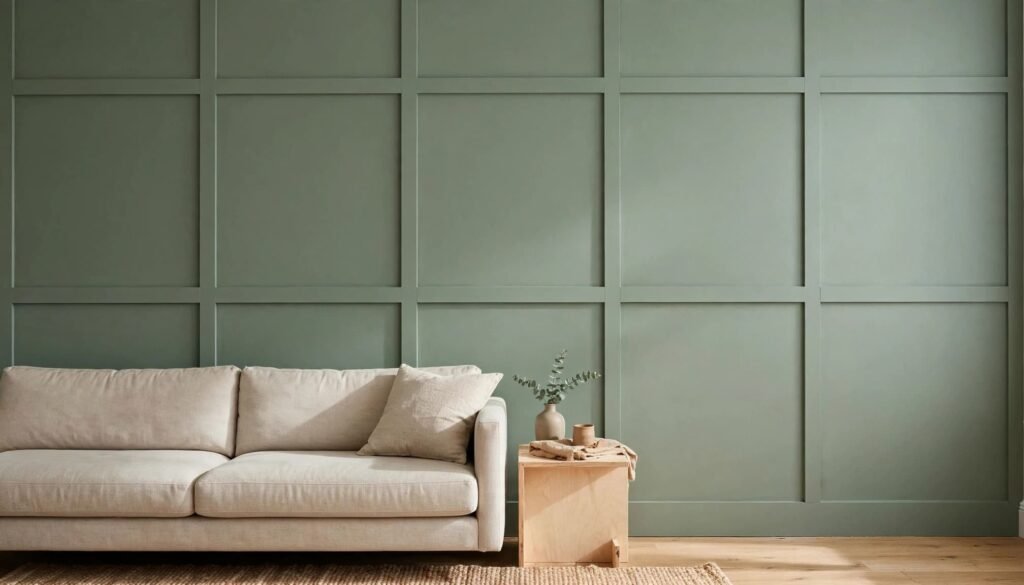
Simple picture-frame molding or a small painted board-and-batten wall may suit a careful DIYer with the right tools. Large rooms, complicated corners, uneven walls, heavy panels or work around electrical fittings may call for an experienced installer or trade professional.
Before you start:
- Measure the full wall, including its height and any openings.
- Choose the panel height and mark a level reference line.
- Find and mark studs or other suitable fixing points.
- Map sockets, switches, cables, windows, doors, radiators and built-ins.
- Draw the complete spacing plan, including both end panels.
- Make a sample layout with tape or loose trim before buying all the material.
- Check that the wall is sound, dry and suitable for the product.
- Cut a small test piece and check its fit before cutting the rest.
- Install the panels or trim according to the product instructions.
- Fill fixings and finish joints with materials suitable for the substrate.
- Prime and paint if the product requires it.
- Inspect the finished wall in daylight and evening light, then touch up any uneven lines or gaps.
If panels change the depth around an outlet or switch, don’t cover the fitting or improvise with electrical wiring. Ask a qualified electrician what adjustments are needed. For heavy shelves, TVs and mirrors, plan suitable support behind the paneling.
A useful layout tip: don’t start at one end and repeat the same spacing blindly. Work out the whole wall first, so the last panel doesn’t become a thin sliver. Bob Vila’s board-and-batten project guide also recommends planning the end-piece widths before installation.
How high should wall paneling be?
There is no universal height that works for every room. Lower-third, half-wall, three-quarter-height and full-height treatments are all options. Choose a line that makes sense beside the ceiling, furniture, windows, doors and any existing chair rail or dado rail.
- Lower-wall treatment: Leaves plenty of open wall above and can suit hallways or rooms with traditional details.
- Half-wall treatment: Creates a stronger division between the lower and upper wall.
- Three-quarter height: Adds more coverage and drama. Check how it lines up with windows and nearby furniture.
- Full height: Turns the whole wall into a feature. It can make a strong room statement, so consider the pattern and color carefully.
Use masking tape to try more than one height. Check the view from the doorway, from your usual seat and beside the furniture that will stay in the room.
Can wall paneling make a small room look bigger?
It can change how a small room feels, but it won’t add actual floor space. Vertical lines may draw the eye upward, while a simpler horizontal pattern can make a narrow wall feel broader. Light colors often feel more open, but a dark wall can also feel cozy if that’s the effect you want.
For small rooms:
- Use fewer, larger panel shapes rather than a busy grid of small rectangles.
- Consider a single feature wall instead of paneling every surface.
- Try vertical details if you want to emphasize height.
- Keep the trim, furniture and wallpaper from competing for attention.
- Check how a dark color looks in the room’s actual light.
- In a small bathroom, use a simple pattern and avoid unnecessary grooves.
What colors work best with wall paneling?
The best color depends on the room’s light, finishes and mood. You don’t have to default to white.
- White or warm cream: Bright and flexible, but the undertone should work with your floors and other whites.
- Beige or warm neutral: Softer than stark white and easy to pair with natural materials.
- Sage or olive: Adds color while keeping a muted, natural feel.
- Navy or muted blue: Makes a strong focal point and can suit living rooms or bedrooms.
- Charcoal or deep green: Creates a more dramatic, enclosed feel. Check the wall in both daytime and evening light.
- Warm brown or natural wood: Adds visible grain and warmth.
Choose same-color paneling when you want texture without strong contrast. Choose contrasting paneling when you want the frames to stand out. Color-drenching, where the wall, trim and sometimes nearby details share a color, can make the paneling feel more integrated.
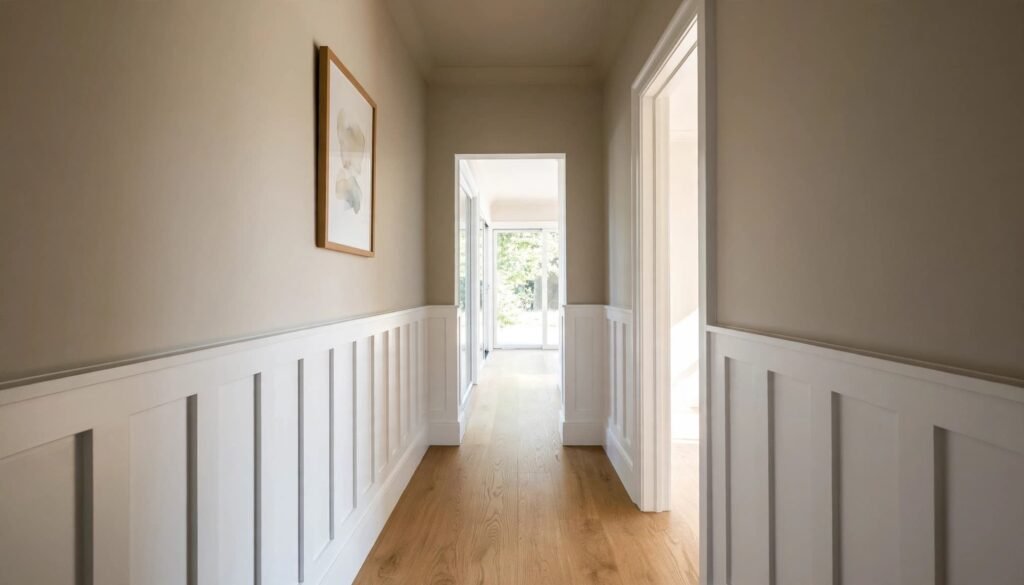
Which wall paneling style is right for you?
| If you want… | Consider… | Best thing to check |
|---|---|---|
| Classic character | Wainscoting | Whether the molding suits the room’s existing trim |
| Farmhouse or cottage feel | Board and batten | Batten spacing and baseboard details |
| Modern texture | Slat or fluted panels | Dusting needs and how bold the grooves look |
| Cottage style | Beadboard | Sheet seams, edges and finish |
| Traditional elegance | Picture-frame molding or raised panels | Frame size and nearby architectural details |
| A warm natural look | Wood panels or veneer | Grain, finish and room conditions |
| Bathroom practicality | A panel system approved for that exposure | Wet-area rating and full installation instructions |
| A budget makeover | Paint-grade MDF trim or beadboard | Preparation, finish and moisture limits |
| A TV feature wall | Slats or a simple media-wall design | Cable access and support behind the finish |
| A bedroom feature wall | Shaker or slat panels | How the panels relate to the bed and lighting |
Half-wall or full-wall paneling?
Choose half-wall paneling if you want a lower-wall feature, a visual break or a treatment that leaves more open wall. Choose full-wall paneling if you want one wall to read as a strong architectural feature. Half-wall treatments are often easier to balance with existing trim; full-height designs can feel more dramatic but may dominate a small or already busy room.
Wainscoting or board and batten?
Wainscoting describes a lower-wall treatment made in several styles. Board and batten describes a particular look made with vertical battens and panels or a flat backing. Choose wainscoting when you’re deciding how much of the wall to cover; choose board and batten when you know you want those vertical divisions.
Slat or fluted panels?
Slats usually have separate raised strips with visible gaps between them. Fluted panels have a repeated grooved surface. Slats tend to look more graphic and can collect dust in their gaps. Fluting can appear more continuous, though cleaning still depends on the groove depth and material.
Mistakes to avoid
- Choosing a style before measuring the room. Measure the wall and mark the proposed panel lines first.
- Leaving awkward panel spacing. Sketch the whole wall and balance the end panels before cutting.
- Ignoring sockets and switches. Include fittings in the layout and ask an electrician about changes.
- Setting a half-wall too high or low by guesswork. Test the top line with tape and view it beside furniture and windows.
- Using moisture-sensitive panels in wet areas. Match the complete panel system to the exposure and follow its instructions.
- Paneling every wall by default. Start with one focal wall or lower-wall treatment if the room has other strong details.
- Ignoring dust and cleaning. Think about the grooves and finish before choosing slats or deep fluting.
- Combining too many textures. Keep wallpaper, rugs, curtains and panels from competing.
- Forgetting the existing baseboard. Work out whether it stays, is removed or needs a transition detail.
- Choosing a trendy style that fights the home. Consider the room’s windows, doors, trim and overall architecture.
- Using trim to hide a serious wall problem. Fix damp, loose plaster or major unevenness first.
- Mounting a heavy item only to decorative panels. Plan for suitable wall framing or other support.
When not to panel a wall
Skip the project, or solve the underlying problem first, if the wall is damp, leaking or structurally damaged. Paneling can hide symptoms without fixing the cause.
It may also be the wrong choice when:
- The room already has many competing details.
- You rent and don’t have permission to make permanent changes.
- Utilities or access panels need to remain easy to reach.
- You dislike cleaning grooves and are considering deep slats.
- The wall’s shape or openings make a tidy layout difficult.
- A panel system would be exposed to moisture it isn’t designed to handle.
A plain painted wall is sometimes the better choice. If you still want texture, try a smaller feature or a removable option that suits the surface and room.
Frequently asked questions
What is the cheapest way to panel a wall?
Paint-grade trim or beadboard sheets can be budget-conscious options, especially for one wall or a lower-wall treatment. Compare material, preparation, paint, fixings, waste and labor, not just the panel’s price.
How high should wall paneling be?
There’s no set height for every room. Consider lower-third, half-wall, three-quarter-height or full-height paneling, then test the line against your ceiling, windows, furniture and trim.
Is MDF good for wall paneling?
MDF can work well for smooth, painted decorative panels in suitable dry areas. It is moisture-sensitive, so check the product’s instructions and don’t treat moisture-resistant MDF as automatically waterproof.
Can you use wall paneling in a bathroom?
Yes, if the complete panel system is designed for the moisture exposure. Keep ordinary MDF away from direct water, and check the manufacturer’s requirements for the substrate, joints, edges, ventilation and cleaning.
Is wall paneling difficult to DIY?
A small, simple molding or board-and-batten project may suit a careful beginner. Large installations, uneven walls, complicated cuts and work around electrical fittings may be better handled by a professional.
Does wall paneling collect dust?
Some designs do. Slats and deep flutes have grooves that may need more frequent cleaning than flat painted panels. Check the product’s care instructions before choosing.
Can I paint wall paneling?
Many paint-grade panels and wood trims can be painted, but preparation depends on the material and existing finish. Follow the primer and paint instructions for that specific surface.
Will wall paneling go out of style?
Some looks are more tied to current tastes than others. Simple proportions, colors you enjoy and materials that suit the home are usually safer choices than an elaborate pattern chosen only because it’s popular now.
Is half-wall or full-wall paneling better?
Half-wall paneling leaves more open wall and suits lower-wall treatments. Full-wall paneling makes a stronger feature. Choose based on the room’s size, existing details and how prominent you want the finish to be.
Can wall paneling go over an uneven wall?
Small surface variations may be manageable with the right method, but trim won’t fix a badly bowed or damp wall. Check the wall first. Some panel systems call for a batten framework on uneven surfaces, so follow the instructions for the product you buy.
Choose the paneling you’ll enjoy living with
For classic character, consider wainscoting or picture-frame molding. For a modern focal point, look at slats or fluted panels. Choose wood when the grain matters, paint-grade MDF or beadboard when you want a budget-friendly painted finish, and a bathroom panel system only when its manufacturer approves it for the intended exposure.
Before you buy, tape out the panel height and spacing on the wall. That simple mock-up can reveal awkward lines, crowded switches or a feature that feels too large for the room.
More about this: Bedroom Wall Decor Ideas: 35 Ways to Make Your Wall Work