The Ultimate Small Bedroom Layout Guide: Rules for Furniture, Walkways & Lighting
I’m not an interior designer. I want to say that upfront, because it matters.
What actually got me into this was wallpapering one small room a few years back — a weekend project that went sideways more than once, but it’s what got me paying attention to how a room’s layout changes the way it feels. Since then, this has been research, not personal trial and error on a dozen bedrooms. I read a lot, I compare what designers actually recommend, and I try to explain it in a way that doesn’t require a design degree to understand.
So think of this less as “here’s what I did” and more as “here’s what actually holds up when you look at how small bedrooms are supposed to work.”
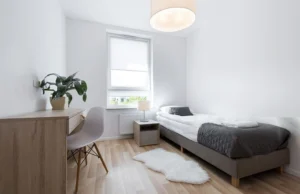
Forget the Bed. Start With Where You Walk.
Most advice tells you to plan around the bed first. Start with the walkway instead — it matters more than people think.
Before buying anything, walk the room. Notice where you’d naturally move: door to closet, bed to window. Those paths need real breathing room, at least two feet, ideally closer to 30 inches. Squeeze that space and you’ll feel it every single day, even if you can’t quite explain why. It’s one of the most common mistakes in small bedrooms, and one of the easiest to avoid before you buy furniture.
Once you know where the walkway has to be, the rest of the layout tends to fall into place.
Where the Bed Actually Goes
Here’s something that surprises a lot of people: centering the bed on the widest wall usually beats tucking it into a corner, even in a genuinely tiny room.
A corner placement looks like it should save space. In practice, it traps the bed against two walls, makes it harder to make, and can feel a little closed-in. Centering it instead gives you a walkway on both sides — even a narrow one on each side beats a wide one on one side and nothing on the other.
If there’s truly no room for two nightstands, it’s fine to lose one. A single nightstand with a drawer does more work than two tiny surfaces with nowhere to put anything.
Furniture That Actually Earns Its Spot
In a small room, every piece of furniture should be doing more than one job if it can. That’s the whole idea behind multi-functional furniture, and it’s one of the biggest space-savers available:
- Storage ottoman at the foot of the bed — doubles as seating and extra storage
- Bed frame with built-in drawers, which can skip the need for a separate dresser
- Slim desk that also works as a vanity
- Wall-mounted shelves instead of a bookcase, freeing up an entire section of floor
None of these are exotic ideas. They just ask more of the furniture you already need to buy anyway.
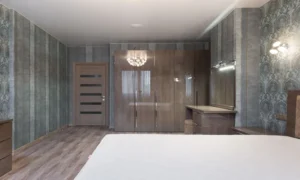
Where Does All Your Stuff Actually Go
Storage is where small bedroom organization either works or completely falls apart. Floor space is limited, so the goal is moving storage up onto the walls or into furniture you already have.
A few things worth trying:
- Floating shelves above the headboard instead of a bulky nightstand
- Over-the-door organizers inside the closet for shoes and accessories
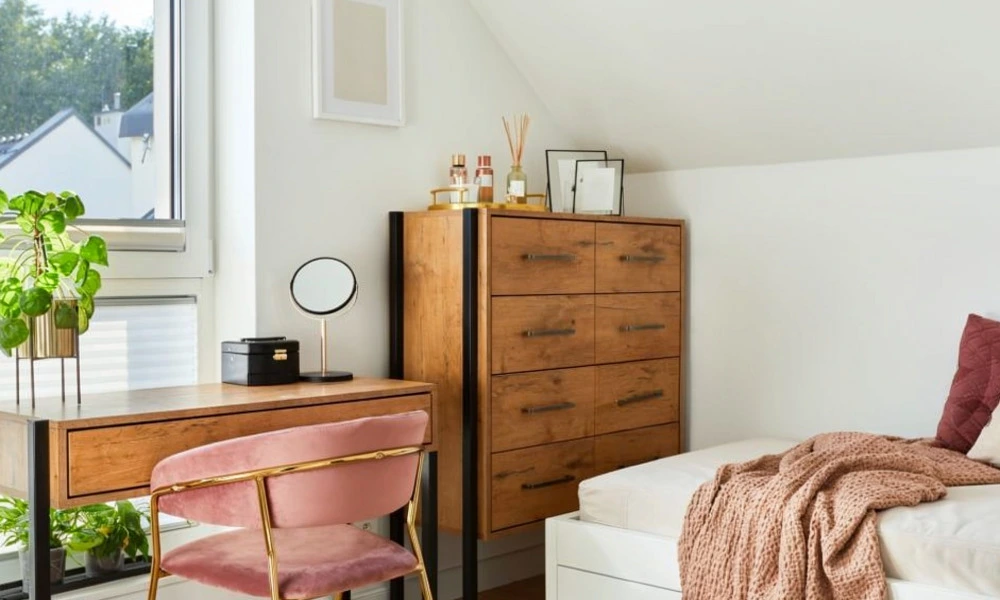
- A tall, narrow dresser instead of a wide, low one — same storage, smaller footprint
- Under-bed bins for out-of-season items, if the bed frame has the clearance
Ask “could this go up instead of out” before buying anything new, and most of the clutter problem solves itself.
Lighting Strategies People Usually Skip
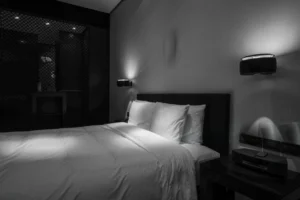
Lighting gets overlooked constantly, and it’s a shame — bad lighting will make even a well-arranged room feel smaller than it actually is.
Layer the light instead of relying on one overhead fixture: a ceiling light for general brightness, a reading lamp near the bed, and one small accent — a lamp on a shelf, or string lights along a wall. Together they do more for a room’s mood than one bright bulb ever will. For a deeper breakdown of fixture types and placement, this lighting guide covers it well.
If the window doesn’t bring in much natural light, a mirror placed across from or near it will bounce whatever light there is further into the room. Small trick, noticeable difference.
Color Schemes and Visual Enlarging Techniques
Color schemes for small rooms get oversimplified into “just paint it white,” which isn’t quite right. What actually matters more is contrast, not brightness.
Keep the walls, ceiling, and larger furniture close in tone. When everything blends instead of competing, the eye reads the room as one continuous space instead of a room full of separate objects. Color is still fine — a single accent wall or a bold headboard won’t shrink a room, as long as it doesn’t fight everything else.
A couple of other visual enlarging techniques worth trying: hang curtains close to the ceiling rather than right above the window frame, which draws the eye upward. And choose a rug that’s slightly too big rather than too small — a rug that doesn’t reach any furniture makes the room look choppy and unfinished. If your room’s shape is part of the problem — a sloped ceiling, an awkward nook — this guide to oddly shaped bedrooms is worth a look too.
A Simple Floor Plan You Can Copy
If you want a starting point instead of building from scratch, this layout works in most small bedrooms:
- Bed centered on the longest wall, headboard against it
- One nightstand on the side closest to the door
- A slim dresser or wall shelving on the opposite wall from the bed
- A rug two-thirds under the bed, extending into the walkway
- A mirror positioned to catch light from the window
It’s not the only layout that works — just a solid default when you’re staring at an empty room and not sure where to begin.
Mistakes Worth Avoiding
A lot of what makes a small bedroom feel cramped comes down to a handful of repeated mistakes — buying furniture before measuring the walkways, or choosing a bulky headboard because it looked good in a showroom rather than thinking through how it’d feel in a nine-foot-wide room. I’ve broken down the most common small bedroom layout mistakes in more detail if you want the fuller list.
A small bedroom isn’t a problem you solve once. It’s a room you keep adjusting as your stuff, your habits, and your taste change. Start with the walkway, be honest about what your furniture is actually doing for you, and the rest tends to follow.