How to Arrange a Living Room Without a TV Wall (Fireplace, Window & Conversation-First Layouts)
Most of my old apartment’s living room worked fine except for one wall — the one that was supposed to hold the TV. It had a window on the left, a doorway to the hall on the right, and about four feet of usable space in between. Every layout guide I found assumed I had ten clean feet to work with. I didn’t, and I’d guess a lot of people reading this don’t either.
If you’ve stood in your living room staring at a wall that just won’t cooperate, you already know the problem isn’t your furniture. It’s that most layout advice is written for a room shape that doesn’t match yours.
This guide skips the general spacing rules — for walkway width, sofa proportions, and coffee table distance, our small living room layout guide already covers that in detail. What’s here instead: what to do when your room’s real focal point is a fireplace, a window, or nothing architectural at all — and where the TV actually goes once you stop trying to force it onto a wall that was never built for it.
Quick Answer
Stop planning the room around the television. If you have a fireplace, build the layout around that instead and give the TV a side position — a bracket, a low shelf, or space inside a bookcase. If a window is your room’s best feature, face the seating toward it and treat the TV as secondary, using a swivel mount or rolling stand so it can turn toward the seating without owning a wall. If neither exists, arrange the sofa and chairs to face each other and let the room work as a conversation space first. None of these layouts require a dedicated TV wall to feel finished.
When the Room Already Has a Focal Point: The Fireplace
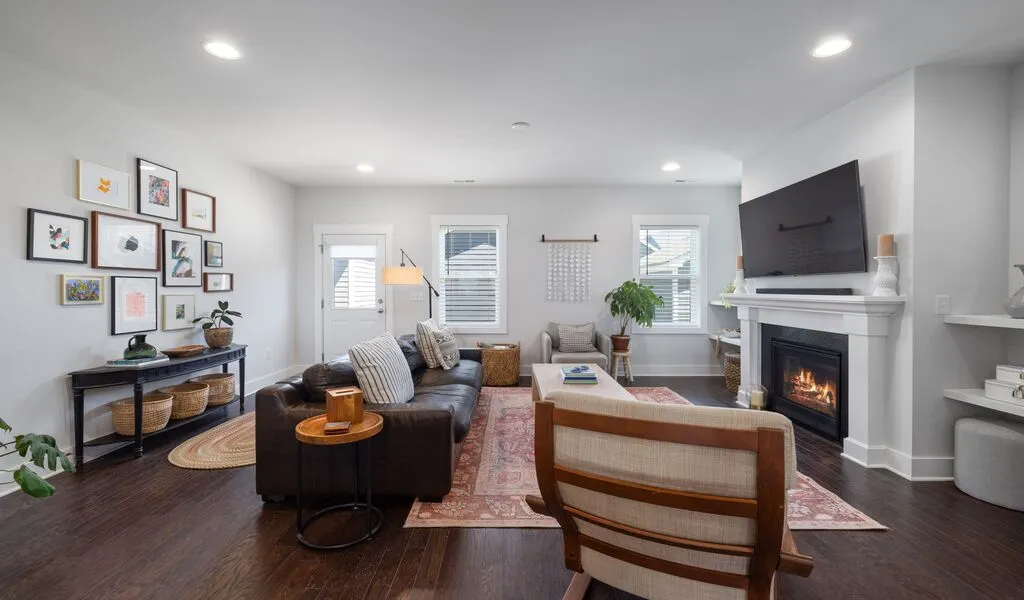
A fireplace solves the “no TV wall” problem before it starts, because it gives the room something to organize around that isn’t a screen. The mistake is trying to make the TV compete with it anyway.
The most common fix — mounting the TV directly above the mantel — works, but only if the seating is close enough that the screen sits near eye level once someone’s actually sitting down, not standing in the doorway looking at it. On a tall mantel with low seating, that TV ends up higher than it should be, and necks pay for it during a two-hour movie.
Skip the Mantel and Use the Side Instead
Putting the television beside the fireplace — inside a bookcase, on a low shelf, or on a slim stand tucked into the alcove — keeps the fireplace as the obvious focal point and gives the TV a home that doesn’t fight it for attention. This works especially well if the fireplace has flanking alcoves, which most built-in fireplaces do.
- Built-in alcove shelving on one or both sides holds the TV at a lower, more comfortable height than a mantel-mounted screen usually allows.
- A low media console beside the fireplace, rather than centered on it, means the fire stays visible and dominant even when the TV is off.
- Keep the fireplace clear of clutter. If the TV isn’t above it, the mantel itself becomes decor — treat it that way instead of a shelf for remotes and cables.
Two sofas facing each other, both angled toward the fireplace, is a layout that shows up constantly in design photos for a reason — it works in rooms both large and small, and it doesn’t require a flat opposing wall the way a sofa-facing-TV setup does. If the room is tight, a single sofa with two chairs angled in works the same way at a smaller scale.
When the Room’s Best Feature Is a Window, Not a Wall
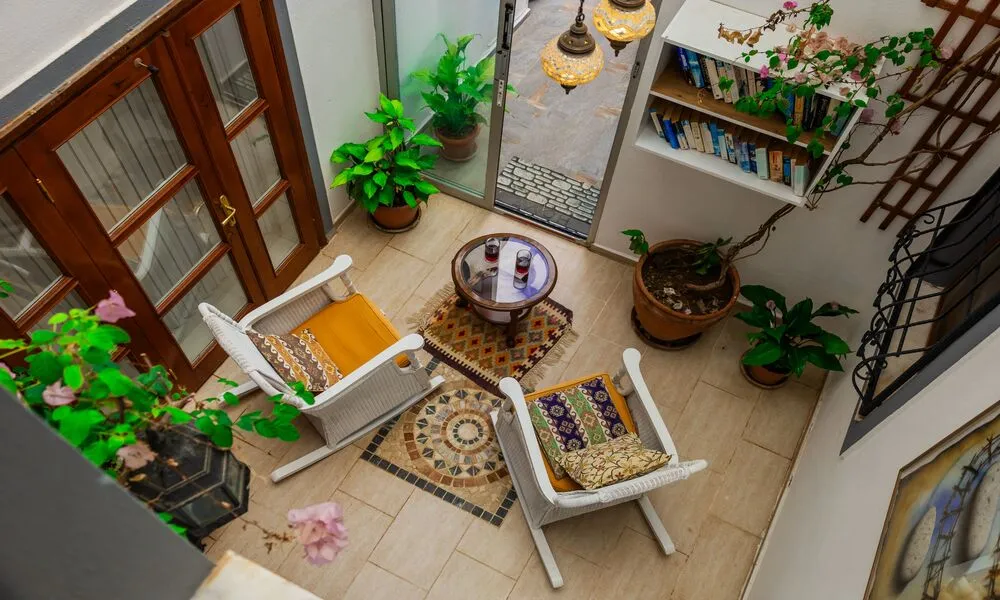
Some rooms don’t have a fireplace, but they do have a view — a bay window, a wall of glass doors, a window seat — and that view is doing more for the room than a television ever would. Fighting that by cramming a TV into the same sightline usually loses.
Face the seating toward the window first. A sofa positioned to look out, with chairs angled to include both the window and each other, makes the room feel oriented toward something real instead of a blank rectangle.
The TV-and-Window Problem, Honestly
Putting a television directly in front of a window is possible, but it comes with a real issue: light from behind a screen washes out the picture and makes the TV harder to watch during the day. If there’s genuinely no other wall for it, a few things help.
- Full-motion mounts let the TV pull away from the window and angle toward the seating rather than sitting flush against the glass.
- Blackout or light-filtering blinds cut the glare enough to make daytime viewing usable without blocking the view entirely when they’re open.
- A slim, open-shelf stand in front of a lower window section blocks less of the view than a solid cabinet would.
Some people just accept a seasonal trade-off — the window wins in summer when the light and the outdoor view matter more, and the TV gets pulled into more regular use once evenings get darker earlier. There’s no rule that a room has to look identical in every season.
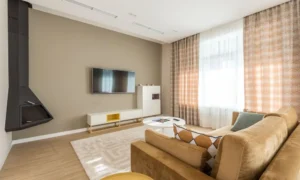
Conversation-First Layout: When There’s No Focal Point at All
No fireplace, no standout window, just four plain walls — this is the room where most people default to “sofa against the longest wall, TV opposite it,” simply because nothing else suggests a direction.
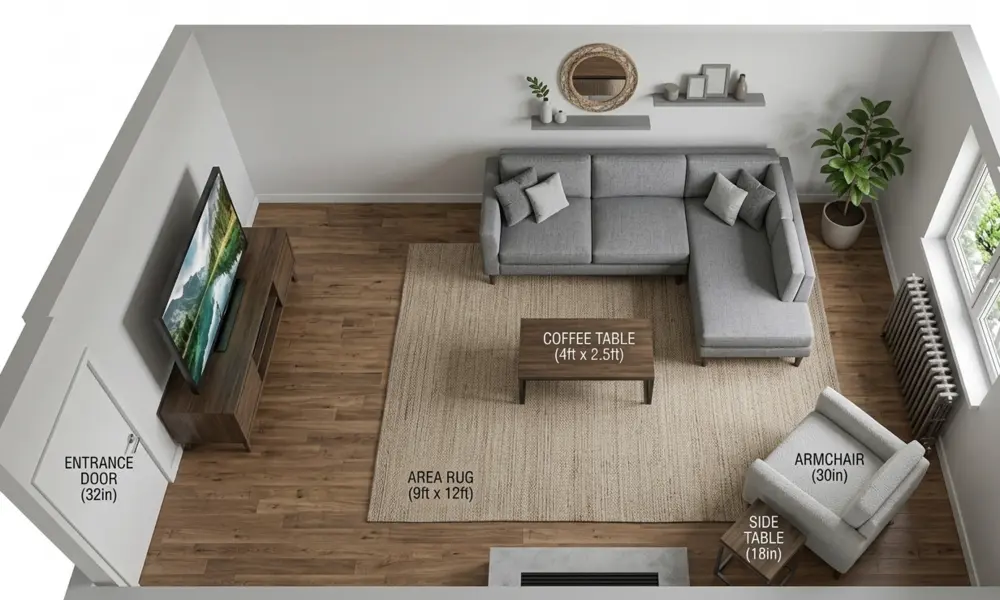
A conversation-first layout doesn’t need an architectural feature to work. Two chairs and a sofa arranged to face each other, or a loose U-shape around a rug and coffee table, creates its own center of gravity. The room stops needing a wall to organize around because the seating group organizes itself.
This is where a rug earns its keep. Placed under the front legs of every seating piece — the exact sizing rules for that are in our layout and proportions guide — the rug visually ties the group together even without a wall behind it doing that job.
Once the seating group is set, the TV becomes a secondary decision rather than the starting point. It can go on whichever wall segment happens to be available, angled if needed, because the room’s real center is the seating itself.
Floating the Sofa Instead of Anchoring It to a Wall
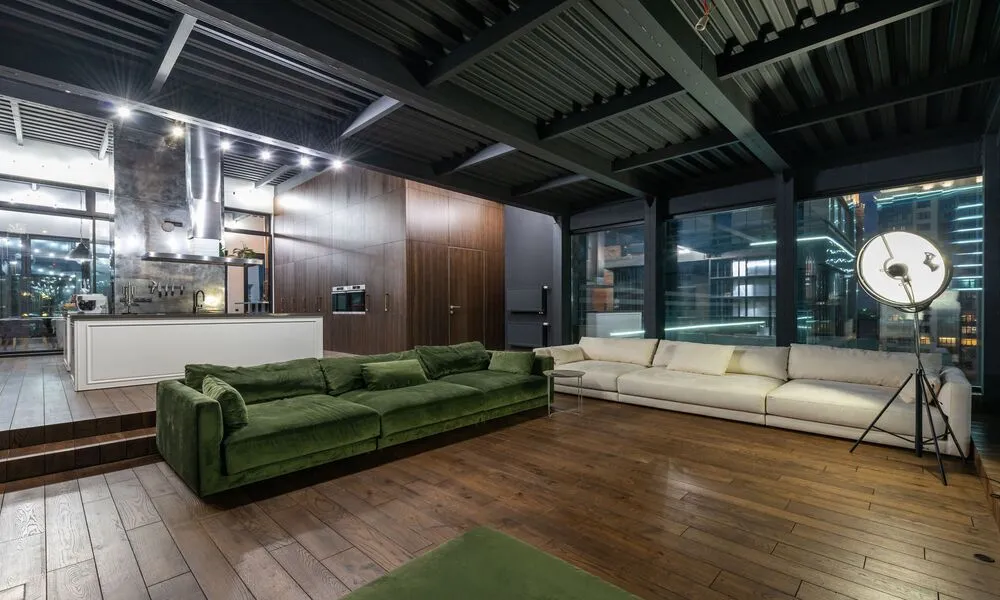
Pulling the sofa off the wall and into the middle of the room solves a version of the same problem from a different direction — instead of looking for a wall to build around, you stop needing one.
A floated sofa works particularly well in open-plan spaces that flow into a kitchen or dining area, where walls are already scarce. The back of the sofa becomes the boundary line for the living area, doing the job a wall would normally do without actually being one.
- Leave enough space behind a floated sofa to walk past it comfortably — this is one of the few numbers worth repeating here, and it matters more in a floating layout than a wall-anchored one, since people will walk behind it as often as in front.
- Back the sofa with something low — a slim console table or a bench — so the reverse side doesn’t look unfinished from the kitchen or entry.
- A rug sized to the seating group, not the whole open-plan space, keeps the living area visually separate from whatever’s on the other side of that sofa.
I’ll be honest — floating a sofa feels wrong the first time you try it, because most of us grew up with furniture pushed against walls by default. Give it a week before deciding it doesn’t work. Most people who try it end up preferring how much more open the room feels.
What to Actually Do With the TV When No Wall Wants It
Once the room is arranged around a fireplace, a window, or a conversation group, the TV is usually the leftover piece with nowhere obvious to go. A few approaches handle that without forcing a wall that doesn’t exist.
A Swivel Stand or Rolling Cart
A TV on a swivel base — either wall-mounted with a full-motion arm or standing on a rolling cart — can face wherever the seating happens to be that day. This works especially well in rooms doing double duty, where the seating arrangement itself might shift for movie night versus a dinner with friends.
Inside or Beside a Bookshelf
Open shelving with the TV built into one section, surrounded by books and a few objects, stops the screen from reading as the obvious main event. It also solves the wall problem directly — the shelving unit becomes its own freestanding wall, wherever it’s placed in the room.
Low and Out of the Sightline
A TV on a low console, positioned below eye level from the main seating, reads as less dominant than one mounted at standing height. It’s a simple trick, and it costs nothing beyond choosing furniture that sits lower to the ground.
Matched to the Wall Behind It
Painting the wall behind the TV a color close to the screen’s black lets the television visually recede when it’s off, which matters more than people expect in a room where the TV was never meant to be the star.
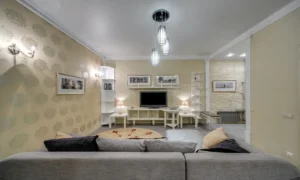
Common Mistakes in a Room Without a TV Wall
- Forcing the TV onto a wall that’s too short. A console that’s wider than the available wall segment ends up crowding a doorway or window it was never meant to sit near.
- Mounting a TV above a fireplace without checking the seated sightline. Stand where the sofa will actually be, not where you’re standing while measuring, before deciding the height works.
- Treating the window and the TV as equal priorities. Pick one as the real focal point. Splitting attention between both usually leaves neither working well.
- Skipping the rug when floating a sofa. Without one, a floated sofa can look like it’s drifting in the room rather than anchoring a defined space.
- Assuming the layout has to be permanent. A swivel stand or a seasonal rearrangement is a legitimate long-term solution, not a compromise you eventually have to fix.
Key Takeaways
- A fireplace can replace the TV wall entirely — build the seating around it and give the television a side position instead of the mantel.
- A strong window deserves the same treatment a TV wall usually gets: face the seating toward it first.
- Rooms with no obvious feature at all can still work — a conversation-first layout creates its own center without needing a wall.
- Floating the sofa away from the walls works especially well in open-plan spaces that don’t have enough wall to spare.
- A swivel mount, rolling cart, or bookshelf placement solves the “where does the TV actually go” question without forcing a dedicated wall.
FAQs
Should the TV go above the fireplace if there’s no other wall?
It can, but check the height against the seated sightline first, not the standing one. If the mantel sits high and the seating is low, the screen often ends up above comfortable eye level, and a side position — inside a bookshelf or on a low console beside the fireplace — usually works better.
Is it bad to put a TV in front of a window?
It’s not ideal, mainly because of glare during the day, but it’s workable with the right adjustments. A full-motion mount, blackout blinds, and an open-shelf stand that blocks less of the view all help make it livable.
What if my living room has no fireplace and no notable window?
Build a conversation-first layout instead — sofa and chairs facing each other or arranged in a loose U-shape around a rug. The seating group becomes its own focal point, and the TV can go wherever there’s an available wall segment once that’s settled.
Can I float a sofa in a small living room without it feeling cramped?
Yes, as long as there’s enough room to walk behind it comfortably. It tends to work best in open-plan spaces or rooms with an unusual wall layout, where anchoring furniture to a specific wall isn’t really an option anyway.
What’s the easiest way to make a TV less dominant in a room without a wall for it?
Keep it low, on a stand below eye level, or paint the wall behind it close to the screen’s own black tone so it visually fades when it’s off. A swivel stand also helps, since the TV doesn’t need a permanent, centered position to be functional.
Where This Leaves You
A missing TV wall isn’t actually the problem most people think it is — it just forces a decision that a lot of rooms with a normal wall never have to make. Once the fireplace, the window, or the seating group takes the lead, the television stops being the thing the whole room bends around, and starts being one more piece that fits in wherever it fits in.
If you’re also working with a genuinely tight footprint on top of this, our guide to small living room layout and furniture proportions covers the spacing decisions that apply here too, once the bigger question of what the room is actually built around has been settled.