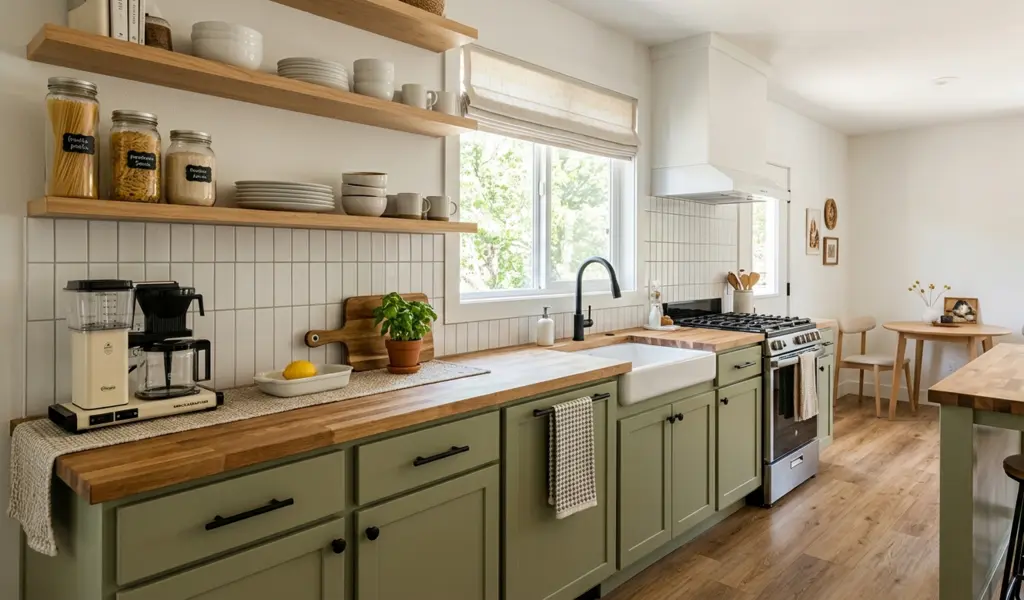
Vintage Kitchen Ideas: The Budget Rules Nobody’s Pinterest Board Tells You
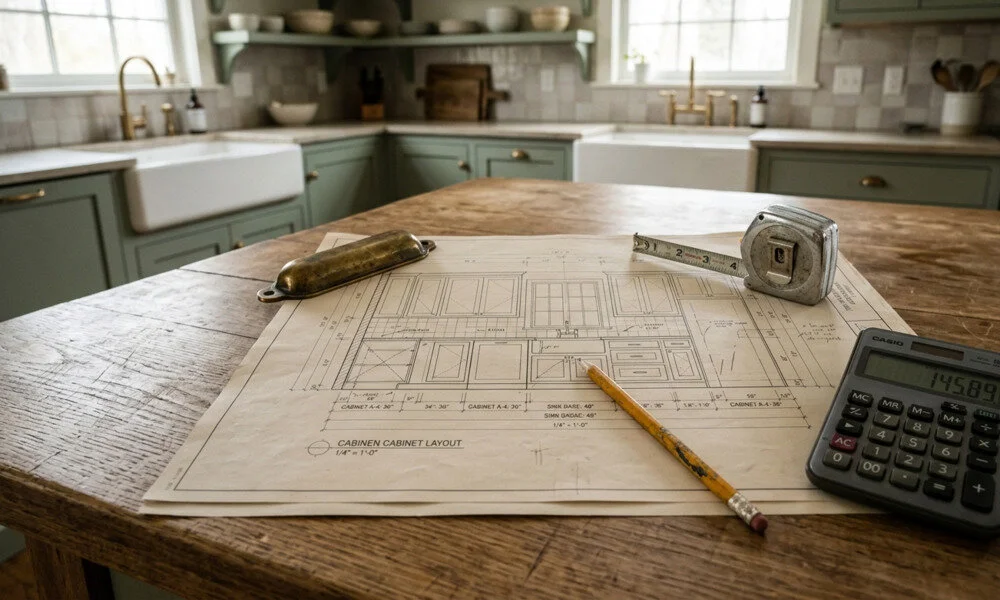
I noticed something while researching vintage kitchens for this guide: almost every high-performing pin shows the finished room, and almost none of them show what it cost to get there. Not the price tag on the sink — the price tag on making that sink actually work.
That gap is the whole reason I wanted to write this differently than the usual roundup. Pinterest is genuinely great at showing you what a vintage kitchen can look like. It’s not built to tell you what a checkerboard floor costs versus a vinyl version of one, or why a “cheap” antique sink can turn into an expensive plumbing job the moment it’s installed. I went digging into that side of it — restoration forums, appliance repair pricing, hardware sourcing threads, plumbing cost breakdowns — because that’s the part nobody puts in a caption.
I’m not a renovator and I won’t pretend to be one here. What I can do is the research part properly: pull the real cost patterns together, compare what people actually paid against what the finished photo implies, and lay out where a vintage kitchen genuinely saves money versus where it quietly drains a budget. That’s what this guide is.
Where the Pinterest Version and the Real Version Split
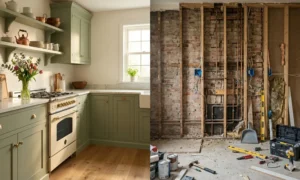
A vintage-look bedroom is mostly paint, fabric, and a few sourced pieces. A vintage-look kitchen is different, because it touches plumbing, electrical, and appliances that have to function every single day, not just photograph well once.
That distinction is why kitchen renovation costs surprise people more than almost any other room in the house. The visual choices — a color, a tile pattern, a hardware finish — are usually the cheapest decisions in the whole project. The expensive decisions are the invisible ones: what’s behind the wall, what the cabinet base has to be rebuilt to support, whether an appliance from 1962 can even be serviced anymore.
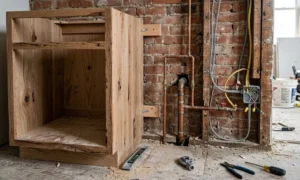
I want to walk through three places where that gap shows up most, based on what I found researching real costs rather than styled photos. Then I’ll get into where vintage genuinely is the cheaper option, because it is, in the right spots.
The Retro Appliance Trap
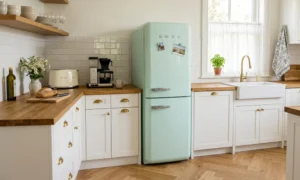
A pastel-colored fridge or a chunky-dialed range is usually the first thing people picture when they think “vintage kitchen.” It also tends to be the most expensive single decision in the room, and for a reason that isn’t obvious until you compare the two paths.
Path one: buy a new appliance built to look old. Reproduction ranges and retro-style refrigerators exist specifically for this look, and manufacturers charge a real premium for the aesthetic — often well above what an equivalent modern appliance without the retro styling would cost. You’re paying for the look on top of the function.
Path two: source an actual vintage appliance, decades old, from a marketplace listing or estate sale. This is where the hidden costs live. Appliances built before modern efficiency standards tend to use noticeably more energy than anything made in the last fifteen years, which shows up as a slow, ongoing cost on the electricity bill rather than one upfront number. Parts availability is the bigger issue, though. A forty-year-old stove doesn’t have a parts aisle. Repair techs who still service that generation of appliance are harder to find, and replacement parts often come from salvaged units rather than a supplier, which adds both time and cost that a listing price never mentions.
None of this means skip the genuine vintage appliance. If it runs well and there’s someone local who can service that specific model, it can be one of the best finds in the whole kitchen. The mistake is judging it purely on how it looks in a photo instead of asking the more boring question first: who fixes this if it breaks, and what does that cost?
Real Brass Hardware Costs More Than People Expect
This was one of the more counterintuitive things I found while researching. The instinct is that salvaged, secondhand hardware should be the budget-friendly part of a vintage kitchen — flea markets, estate sales, salvage yards, all sound inexpensive. Individually, a lot of it is.
The cost hides in the sourcing process, not the price per piece. Matching a full kitchen’s worth of pulls, knobs, and hinges in the same era, finish, and quantity is genuinely difficult. Most salvage finds are partial sets. Six matching pulls when a kitchen needs fourteen is a common outcome, and closing that gap usually means more searching, a longer timeline, or a custom cast reproduction to fill in what can’t be found — which isn’t cheap on its own.
There’s also a compatibility issue that rarely comes up until it’s a problem. Vintage hardware was made to different standard spacings than most cabinets use now. A pull that looks right in a bin at a salvage shop might not line up with the screw holes already drilled into a set of existing cabinets, which means new holes, filled old holes, and touch-up finish work to hide the difference.
New hardware manufactured to look aged sidesteps most of this. The finish is consistent across every piece, the spacing matches standard cabinet drilling, and the sourcing time drops from weeks to a single order. It’s not authentic in the strict sense, but from normal viewing distance, almost nobody can tell — and I think that makes it one of the more sensible trade-offs in this entire project, not just the easier one.
If the cabinets underneath are structurally sound but just dated, it’s worth figuring out how far paint and hardware alone can carry the look before assuming new cabinet boxes are necessary. I went deeper into what’s worth changing inside a cabinet versus what just needs a cosmetic refresh in my small kitchen storage guide.
What an Antique Sink Actually Costs to Install
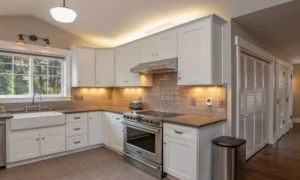
Farmhouse and apron-front sinks come up constantly in vintage kitchen research, and the sink itself is usually the cheapest part of the whole equation. A used cast-iron farmhouse sink can turn up at a salvage shop or online marketplace for a genuinely reasonable price, sometimes less than a comparable new one.
The plumbing underneath is where the real number lives. Apron-front sinks sit differently than a standard drop-in — the sink face sits proud of the cabinet front instead of tucked behind a countertop lip, which usually means the base cabinet needs to be modified or rebuilt to fit it properly. That’s carpentry, not a weekend swap in most kitchens.
Older cast-iron sinks were also plumbed for configurations that don’t always match current fixture standards or code. Rerouting a drain line, adjusting supply lines, or resizing a cabinet opening is a plumber’s job, priced by the hour, and it has nothing to do with how good the sink looks sitting in the kitchen.
That doesn’t mean skip the farmhouse sink — it means treat the installation as its own separate budget line from the sink purchase, and get a plumber to look at the existing setup before buying anything. A short conversation before the purchase can prevent a sink sitting in a garage for months while the cabinet situation gets figured out.
Where Vintage Actually Saves Real Money
After all of that, it’s worth being clear: plenty of vintage kitchen choices genuinely cost less than buying new, when the right ones get picked.
Cabinet refinishing beats full replacement almost every time it’s an option. If the cabinet boxes are structurally sound, sanding, painting, and swapping the hardware delivers most of the visual transformation of a full renovation for a small fraction of the price. Out of everything covered here, this is probably the single highest-value move for a vintage kitchen on a real budget.
Thrift stores and secondhand marketplaces are genuinely useful for the decorative layer — open shelving pieces, ceramic canisters, glass storage jars, the small objects that read as collected over time rather than bought in one trip on the same afternoon. None of these touch plumbing or electrical, so the savings are real and the risk is low. My kitchen decor ideas guide goes further into layering pieces like this without a shelf ending up looking like a display case in a shop window.
Faux finishes deserve more credit than they usually get. Paint and glazing techniques that mimic aged brass, worn wood, or antique tile can deliver most of the visual effect of the real material for a fraction of the cost. A patina glaze over new hardware, a limewash finish on cabinets, vinyl checkerboard flooring instead of reclaimed tile — none of it is cutting corners. It’s how a lot of professionally designed vintage kitchens actually get built, once you look past the finished photo and into how it was made.
Faux Vintage Details That Fool Almost Everyone
If I were planning this on a genuinely tight budget, the faux details are where I’d put most of the money, not the authentic originals.
Checkerboard flooring is a good example of this trade-off. Real reclaimed tile is expensive, heavy, and complicated to install correctly. Vinyl and peel-and-stick checkerboard flooring has gotten convincing enough that most people won’t notice the difference unless they get down on the floor to check the material directly.
Painted faux-aged cabinetry works on a similar principle. A cabinet sanded lightly at the edges, glazed with a slightly uneven finish, and fitted with softly aged hardware reads as a kitchen with real history, even when the cabinet boxes themselves are only a few years old. It’s a technique that costs labor and paint rather than materials and demolition, which changes the entire budget conversation.
Open shelving is arguably the cheapest genuine vintage move available, since in a lot of kitchens it’s simply removing existing cabinet doors rather than adding anything new. It doesn’t suit every kitchen — I’d think twice about it if the dishware inside is mismatched and there’s no appetite to curate what stays visible — but where it fits, it changes the entire feel of a room for the cost of a few hours and some touch-up paint. This is one of several moves I go into in more detail in my 2026 small kitchen trends guide, since it’s showing up in a lot of current layouts well beyond vintage styling specifically.
A More Useful Way to Budget This
Based on everything above, if I were mapping out how to plan a vintage kitchen update without unlimited money, I’d split the project into three categories before buying a single item.
The first category is structural and non-negotiable — anything touching plumbing or electrical. That gets priced first, with an actual professional, before any decorative purchase happens. This category takes the largest share of a realistic budget, and it should, because this is exactly where the surprises live that blow past a planned budget entirely.
The second category is cosmetic and low-risk — paint, hardware, faux finishes, open shelving. This is where a genuine vintage feel gets built without much financial exposure, and it’s where I’d spend the most time comparing options, since the visual payoff per dollar spent is highest here by a wide margin.
The third category is genuinely vintage and worth sourcing secondhand — a specific fixture, a particular piece of hardware, a light fitting with real age to it. Small, specific, low-risk purchases, rather than trying to source an entire kitchen’s worth of authentic period pieces in one attempt.
The order matters more than any single purchase inside it. A lot of the budget overruns that show up in renovation cost breakdowns online trace back to buying the charming, photogenic item first and figuring out the installation cost second. Reverse that order, and a vintage kitchen on a genuinely limited budget becomes a lot more achievable than the finished Pinterest photos make it look. If the bigger question is whether a full renovation makes more sense than a handful of cosmetic swaps, my budget kitchen renovation guide walks through how to figure out which category a specific kitchen actually falls into before committing to either path.
None of this is meant to talk anyone out of the look. A vintage kitchen is worth the effort, and a lot of the individual pieces — the paint, the hardware, the shelving, even a well-sourced faux finish — cost less than people assume once the guesswork gets replaced with an actual plan. The photos aren’t lying about what’s possible. They’re just leaving out the invoice, and that’s the one thing I wanted this guide to put back in.