Pet-Friendly Backyard & Patio Ideas (The Risks Most Guides Skip)
A few years back, a story made the rounds among dog owners: a labrador in Minnesota died after eating cocoa bean mulch — the kind sold at most garden centers for its rich, chocolatey smell. That smell comes from theobromine, the same compound that makes actual chocolate dangerous for dogs. Vets at the ASPCA’s Poison Control Center have documented cases where dogs ingested enough of it to develop tremors, a racing heart, even seizures.
I went looking into pet-friendly backyard and patio design expecting to write about durable fabrics and chew-proof furniture. What I actually found, reading through veterinary sources and a stack of landscaping guides, is that most of the real risk isn’t in the furniture at all. It’s in the dozen small decisions nobody questions until a pet gets hurt by one of them — the mulch brand, the surface temperature, the gap under a gate.
This isn’t a shopping list. It’s a walk through the actual risks, and what to do about each one, whether you’ve got a full backyard or a small rented patio with a couple of pots.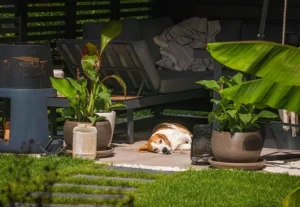
The Ground Your Pet Actually Walks On
Flooring gets picked for looks first and function second, almost every time. With pets in the picture, that order needs to flip, at least a little.
Surface Heat and the Seven-Second Test
Concrete, asphalt, and dark pavers all absorb heat through the day and hold onto it. A UK study measured artificial grass, running-track material, and asphalt all hitting past 50°C (122°F) by mid-afternoon — hot enough to burn a paw pad within minutes, according to vets at Vets Now. Real grass, by comparison, tends to stay noticeably cooler because it holds moisture.
Here’s the test vets actually recommend: press the back of your hand flat against the surface and hold it there for seven seconds. If you can’t keep it there, it’s too hot for paws too. Simple, free, and worth doing before your dog is standing on it in July.
If you’re set on artificial turf — plenty of pet owners are, for the mess it saves — look for turf rated for heat dissipation, and plan on a shaded section nearby regardless. No turf stays cool through a heatwave on its own.
Why Cocoa Mulch Is the One to Avoid
Cocoa bean mulch is the specific one worth ruling out. It smells like chocolate to a dog for the same reason it’s dangerous to one — Michigan State University Extension’s research notes cocoa bean husks can carry theobromine concentrations high enough to cause real symptoms in dogs that eat enough of it.
Cedar and pine bark mulch are considered safer bets and don’t carry that particular risk, though any mulch eaten in large quantities can cause stomach upset in a dog that likes to chew everything in sight. If you’ve got a known chewer, a stone or gravel bed with larger, rounded stones — nothing sharp, nothing small enough to swallow — sidesteps the mulch question completely.
Keeping the Yard Actually Secure
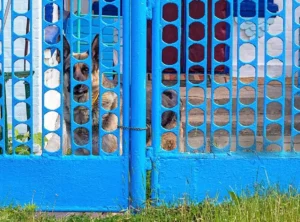
A fence that looks perfectly secure to a person can have gaps a determined dog treats as an invitation. Height matters, obviously, but so does what’s happening at ground level — a small gap under a gate is often how escapes actually happen, not over the top.
For most mid-sized dogs, a fence in the 4 to 6 foot range with no horizontal rails a dog could use as a ladder is a reasonable starting point, though breed and individual dog matter more than any general rule. A known jumper or a determined digger needs specific solutions — a coyote roller along the top, or buried wire mesh along the base — that a standard privacy fence doesn’t include by default.
If you’re renting and can’t install permanent fencing at all, our guide to rental garden ideas and container gardening covers freestanding options that don’t require touching the property, several of which double as a soft visual boundary for a patio dog.
Not Every Plant That Looks Nice Is Safe to Have Around
Some of the most common garden plants are genuinely dangerous if a curious dog or cat decides to sample them.
Plants Worth Ruling Out
Lilies are especially serious for cats — even small amounts of pollen can cause kidney failure. Sago palm, oleander, and azaleas show up on most veterinary toxic-plant lists for the same reason.
Plants Generally Considered Safer
Lavender, rosemary, marigolds, and sunflowers are commonly recommended as pet-tolerant options that still bring color and scent to a yard. That said, “commonly tolerated” isn’t the same as “risk-free for every animal” — individual pets react differently, and the ASPCA maintains a full searchable database of toxic and non-toxic plants worth checking against before committing to a planting list, especially with a dog or cat that chews on greenery out of curiosity rather than hunger.
Designing Around How Pets Actually Use the Yard
A backyard designed entirely around how it photographs tends to fight against how a dog or cat actually uses the space. A dedicated zone — even a small one — solves this without sacrificing the rest of the yard to chaos.
A Dedicated Digging or Perch Zone
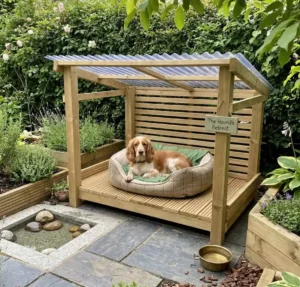
For dogs that dig, a defined sandbox-style pit in an out-of-the-way corner gives them somewhere to do it that isn’t the middle of a flower bed. For cats, a raised platform or a covered nook near a window lets them watch the yard without needing to actually be in the open. Neither has to be large — a 3×3 foot digging pit or a single cat shelf does the job. Keeping that zone visually separate, with a low stone border or a change in ground material, helps it read as intentional rather than like the dog simply won out over the landscaping plan.
Shade as a Structural Requirement, Not a Nice-to-Have
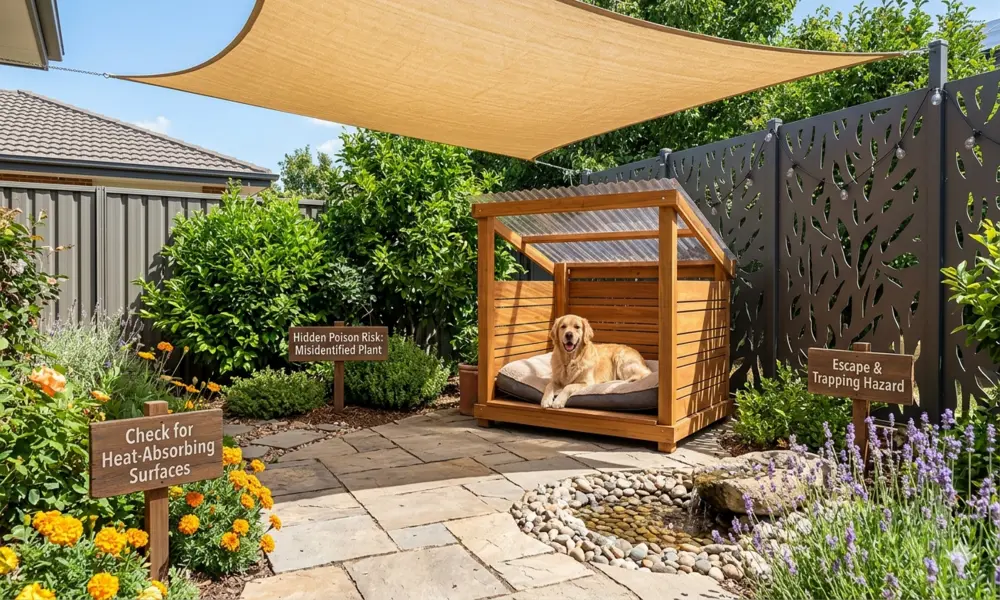
Dogs regulate body temperature far less efficiently than people do — mostly through panting, not sweating — which makes shade a genuine safety requirement on hot days, not a decorative extra.
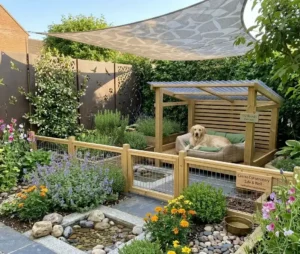
A pergola, a large market umbrella, or a mature tree canopy all work, but the real test is whether there’s coverage during the hottest part of the afternoon, not just at 9am when the sun’s still low. Adding a water feature or a simple pet-safe splash pad nearby extends how long a dog will comfortably stay outside during summer, and gives cats a cooler surface to rest near.
Small Patio, Same Principles
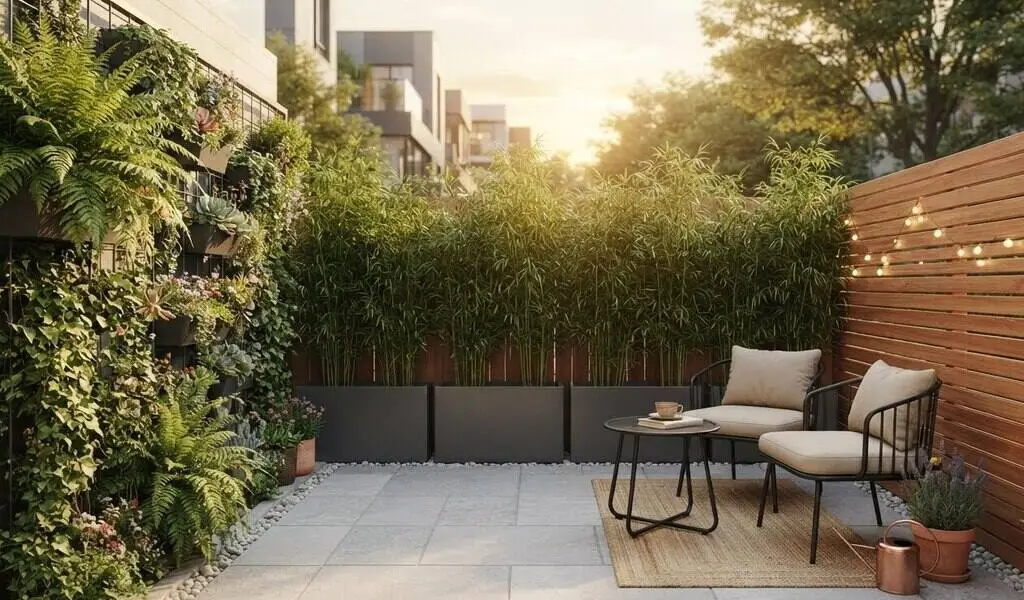
Most pet-friendly design advice assumes a full backyard, which isn’t much help if you’re working with a rented patio, a balcony, or a small stoop. The safety principles hold — heat, toxic plants, secure boundaries — they just need to scale down and stay portable.
Interlocking rubber or composite deck tiles do the heat-management job of grass without any digging, and they lift up entirely on move-out day. A portable pet turf mat, the kind sold for apartment potty training, gives a small patio a defined pet zone without committing to anything permanent. Container plants let you control exactly what’s within reach — stick to the pet-safe list, and there’s no guessing about what’s growing near a curious nose.
For freestanding privacy or a soft visual boundary around a patio pet area, the same lightweight trellis and planter approach covered in our guide to small balcony and patio furniture and layout works just as well here — it just needs pet-safe plant choices layered on top of the general layout advice.
Drainage and Mess Are Easier to Solve Before They’re a Problem
Standing water after rain does two things at once: it creates a mosquito problem, and it turns a yard into a mud pit the moment a dog decides to investigate. Grading the yard so water moves away from high-traffic pet areas, or adding a simple gravel drainage strip along the lowest point, heads off both issues before they start.
Grass that gets patchy or yellow in specific spots is usually a urine-concentration issue rather than a watering problem — worth knowing before assuming the whole lawn needs reseeding. A designated potty area, watered down regularly, keeps that damage contained to one spot instead of scattered across the yard.
You Don’t Actually Have to Choose Between Pretty and Practical
This is where a lot of general advice oversimplifies things — either “pets ruin nice yards” or “just don’t worry about it, dogs don’t care about design.” Neither is quite right, from what I found looking into this.
Stone walkways can be both decorative and durable enough for daily paw traffic. Raised garden beds protect plants from digging without needing a full fence around every flower bed. Wood decking, sealed properly, holds up fine against claws and still looks intentional rather than utilitarian. The actual constraint isn’t style versus safety — it’s picking materials tested against both from the start, instead of retrofitting a human-only design after the fact.
If you want broader budget-friendly backyard ideas beyond the pet-specific layer covered here, our guide to backyard ideas on a budget covers the general layout and decor side in more depth.
Frequently Asked Questions
Is cocoa mulch actually dangerous for dogs?
Yes. It contains theobromine, the same compound in chocolate that’s toxic to dogs, and there are documented veterinary cases of dogs becoming seriously ill after eating it. Cedar or pine bark mulch doesn’t carry that specific risk.
How hot does a backyard surface need to be before it’s dangerous for paws?
Vets generally point to around 120–125°F as the threshold where burns become likely. The seven-second hand test — pressing your palm flat against the surface — is a quick way to check without needing a thermometer.
What plants should I avoid if I have a dog or cat?
Lilies are particularly dangerous for cats, and sago palm, oleander, and azaleas show up on most veterinary toxic-plant lists. The ASPCA’s plant database is worth checking against your specific planting list, since sensitivity varies by animal.
Can I make a rented patio pet-friendly without permanent changes?
Yes. Interlocking deck tiles, portable pet turf mats, and container plants handle most of what a full pet-friendly yard does, without touching anything the landlord would need reversed later.
Does artificial turf get too hot for pets?
It can, sometimes hotter than asphalt on a sunny day. Turf rated for heat dissipation helps, but a shaded area nearby is still worth planning for regardless of turf quality.
Note: Plant sensitivities and heat tolerance vary by individual pet, breed, age, and health condition. I’m not a veterinarian, and this article is based on research from veterinary and horticultural sources, not clinical experience. If your pet shows signs of illness after being outside, or you’re unsure whether a specific plant is safe, check with your vet directly rather than relying on general guidance alone.
None of this requires ripping out an existing yard and starting over. Swap the mulch if it’s cocoa-based. Check the surface temperature before your dog’s out there in August. Look up the plants already in the ground against a toxic-plant list before assuming they’re fine. A pet-friendly backyard and patio isn’t a different style of yard — it’s the same yard, with a few decisions made on purpose instead of by accident.