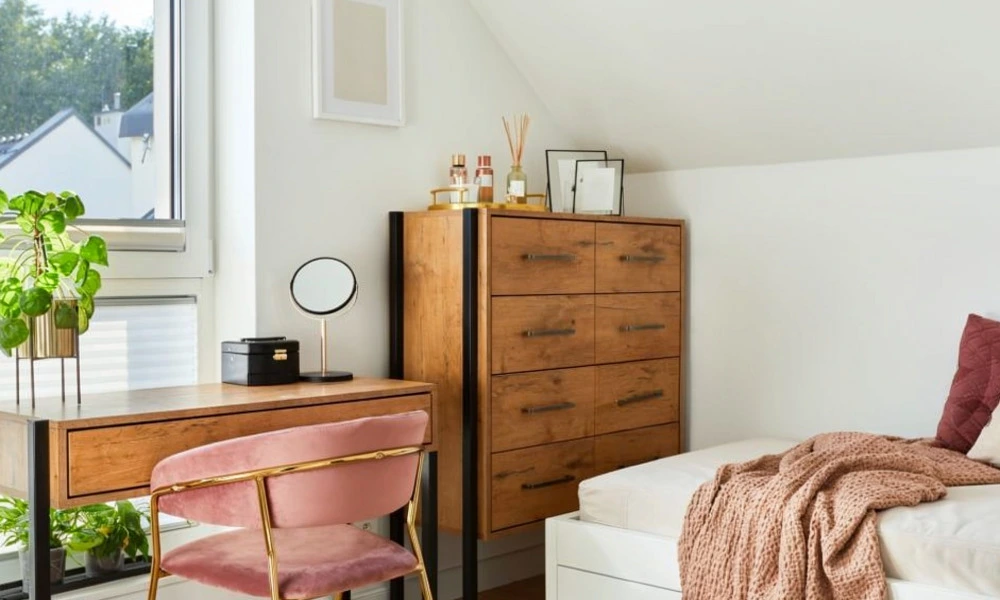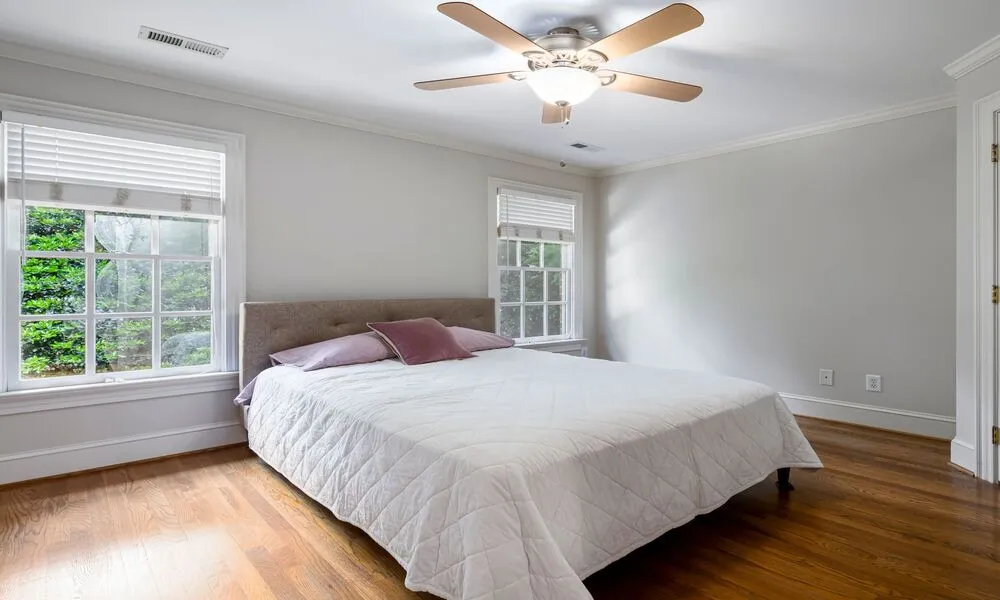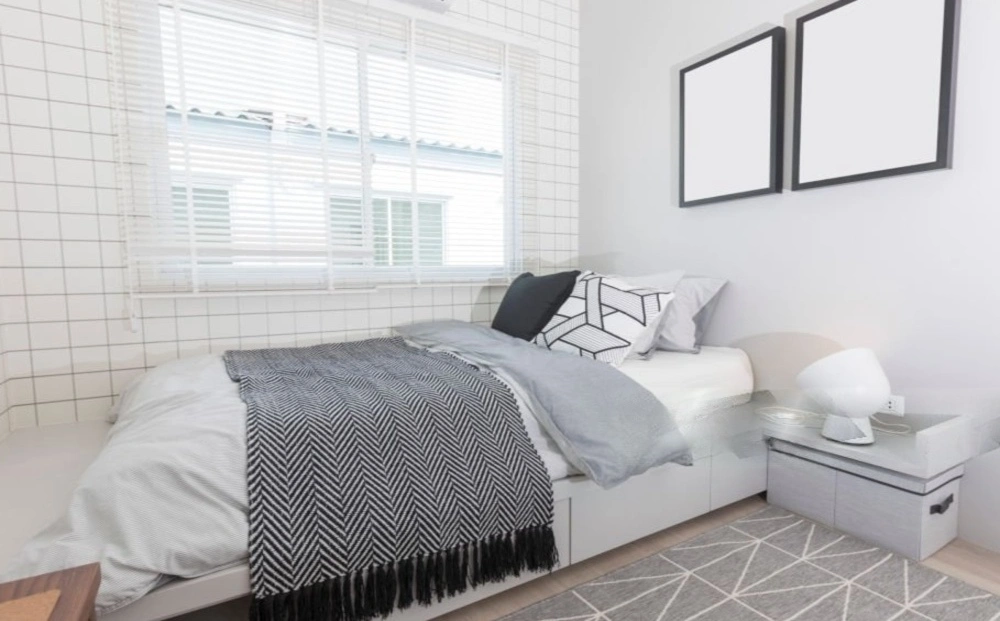
Small Bedroom Lighting: How to Layer It So the Room Doesn’t Feel Smaller
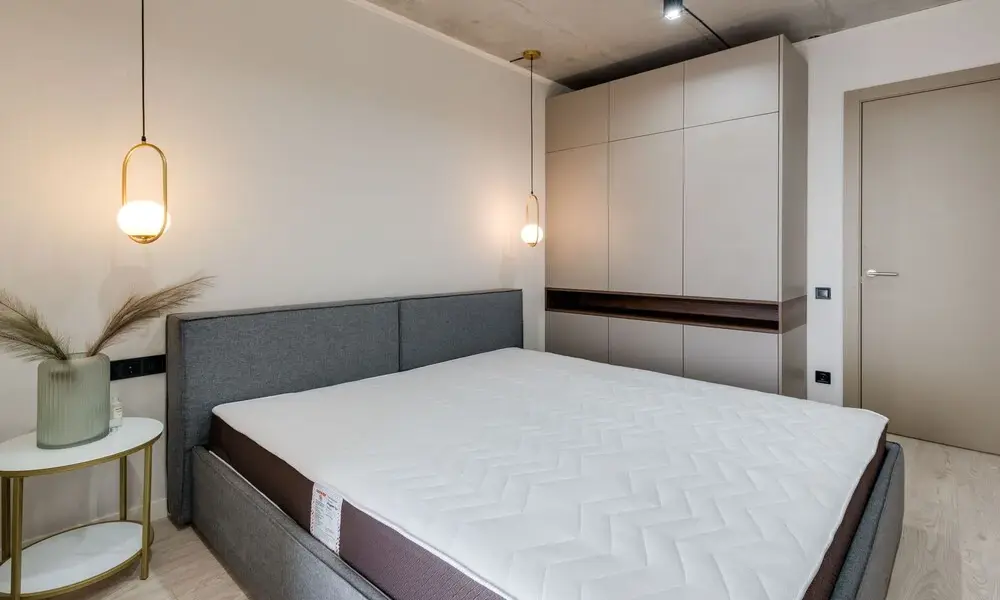
Flip on the ceiling light in a small bedroom and stand there for a second. Notice how every corner goes the exact same shade of bright, and the room suddenly feels closer than it did five minutes ago? That’s not your imagination.
Small bedroom lighting has one job that a single overhead bulb simply can’t do on its own — and once you see why, you won’t be able to unsee it in every under-lit small room you walk into.
Here’s the part most lighting advice skips: a small room needs more light sources than a big one, not fewer. A large bedroom has enough distance for a plain overhead fixture to disappear into the background.
A small bedroom has nowhere for that flat light to go — it bounces off four close walls and washes out every shadow that would normally make the room feel like it has depth.
What a Single Overhead Light Actually Does to a Small Room
Your eyes read space through shadow, not just brightness. A dim corner behind a lamp, a soft gradient near the headboard — that’s what tells your brain “this room has layers, it goes back further than the wall.” A lone overhead bulb erases all of that in one shot. The room gets brighter and, somehow, feels smaller at the same time.
Designers get around this with three types of light working together instead of one:
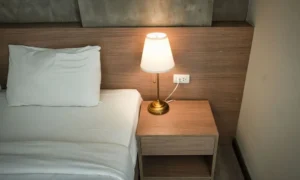
- Ambient light is your base layer — enough to see the room. Usually the overhead fixture, or a floor lamp bounced off the ceiling if you don’t have one.
- Task light is aimed at whatever you’re actually doing — reading in bed, picking out clothes at a mirror.
- Accent light doesn’t do a job at all. It just sits in a dark corner and makes the room feel finished — a small lamp, a plug-in sconce, a strip of warm LEDs.
Most small bedrooms stop at layer one. Adding just the second layer — a bedside lamp — usually changes how a room feels more than anything else you could buy for it, and it’s the cheapest fix on this whole list.
Walk Your Room Before You Buy Anything
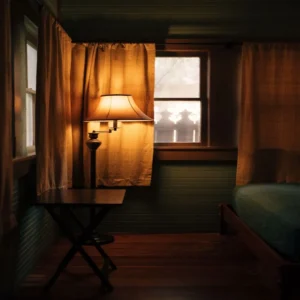
Stand in the doorway tonight with only your current lights on, and ask yourself three things. It takes two minutes and it’ll save you from buying the wrong lamp.
Where do you actually read, dress, or do anything in this room? That spot needs task light — not the ceiling fixture, something aimed right at it. If you read in bed, that’s a bedside lamp or a wall-mounted swing-arm.
Where does the room look darkest or most forgotten right now? Usually a corner, or the wall behind the door. That’s where one small accent light will do more for the room than a brighter bulb anywhere else.
What is your overhead light doing for you after dark, specifically? If it’s the only thing on, it’s carrying a job it was never meant to do alone.
No Ceiling Fixture, or Don’t Want to Touch the Wiring?

Plenty of small bedrooms — rented or owned — either have no overhead light or one nobody wants to mess with. That doesn’t rule out layering, it just moves where your first layer comes from.
A plug-in floor lamp pointed up at the ceiling does almost the same job as an overhead fixture, because bounced light still spreads across the whole room. Put it in a corner rather than the middle — a centered floor lamp in a small bedroom just becomes something to walk around.
For the other two layers, no-drill options cover nearly every case: adhesive-mounted plug-in sconces, battery puck lights tucked on a shelf or dresser, LED strips run along the back of a headboard and plugged into the nearest outlet. None of it needs an electrician or a hole in the wall.
The Detail Almost Every Lighting Guide Skips: Bulb Color
You can buy a beautiful lamp and still end up with a room that feels like a doctor’s office, and the lamp isn’t the problem — the bulb is. This is the one fix that costs nothing extra if you already own the fixture.
Bulbs are labeled in Kelvin. For a bedroom, stay between 2700K and 3000K — that’s the warm, slightly yellow light that reads as cozy.
Skip anything past 4000K in here; that’s daylight-office territory, and in a small room it makes the walls look closer and colder instead of farther away. If a lamp you already like still feels wrong, try swapping the bulb before you replace the whole fixture.
Lighting and Your Wall Decor Aren’t Separate Decisions
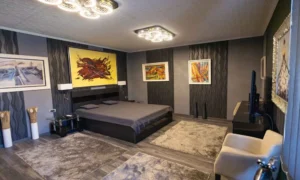
If you’ve already hung art following our bedroom wall decor guide, don’t treat lighting as a separate project — the two work together or fight each other. A small picture light or an adjustable sconce angled toward a gallery wall does two jobs at once: it lights the room and it lights the art, instead of leaving both competing for one overhead bulb.
This is also the cheapest way to add a light source without eating into floor space you don’t have, which matters even more if your room falls into any of the awkward layouts we’ve covered before — a sloped ceiling or an odd nook is often exactly where a wall-mounted light works better than a lamp on a surface that isn’t there.
What to Buy First If Money’s Tight
Three purchases matter more than everything else combined, in this order:
- A warm-white bedside lamp (2700K). Fixes the flat-overhead-light problem more than anything else here, for the least money.
- A dimmer plug or smart bulb for your main light. Being able to turn ambient light down instead of switching it off is what actually makes it a background layer.
- One accent light in whatever corner looks darkest. Small and warm beats bright — this is what gives the room depth, not brightness.
Everything past those three is polish, not necessity. If you’ve been following our budget bedroom decor guide, this is where that same low-cost-first logic applies to light instead of decor.
Common Questions
How many lights does a small bedroom actually need?
Three, doing three different jobs — one for general light, one for a task, one just for warmth. You don’t need five lamps crammed into a small room.
Won’t more lights make a small room feel more cluttered?
Not if they’re small and warm-toned. It’s flat, harsh overhead light that makes a room feel tight — several soft sources do the opposite, because they bring back the shadow and depth your eye needs to read the room as bigger.
Can I do this without an electrician?
Yes. Plug-in lamps, adhesive-mounted sconces, and battery-powered strip or puck lights cover all three layers without touching your wiring.
What Kelvin should I avoid?
Anything above 4000K. It reads as cold and clinical in a small space, which works against everything the layering is trying to do.
One Last Thing
A small bedroom doesn’t need a bigger light. It needs more than one. Add a warm lamp by the bed, put a second small source in the darkest corner, and keep your bulbs under 3000K — the same four walls that felt flat under one overhead bulb will start to feel like somewhere you’d actually want to be at 9pm.