Small Living Room Decor Ideas on a Budget That Still Look Luxurious
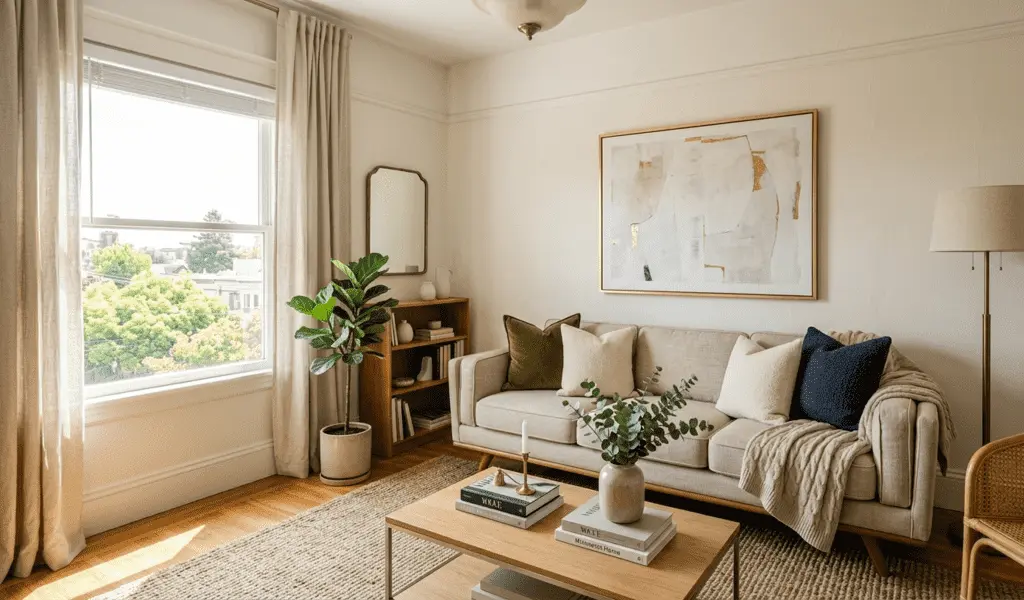
Most small living rooms fail for one of two reasons, and square footage usually isn’t either of them. The first is furniture scaled down to “fit” the room, which tends to look like it was borrowed from a dollhouse rather than sized for an adult living space. The second is a single overhead light doing all the work, which flattens every surface in the room to the same shadowless brightness a hallway gets. Neither one is a size problem, which is the useful part — both are fixable without knocking down a wall or replacing anything you already own.
A lot of small living room advice online assumes you can paint any wall, drill into anything, and buy new furniture whenever something isn’t working. Renters usually can’t do most of that, which is a big part of why “apt ideas” searches have climbed so sharply on Pinterest this year — people are furnishing spaces they don’t fully control, on budgets that don’t stretch to replacing a whole room. Everything below is built to work inside those limits, not around them.
What Makes a Small Living Room Feel Luxurious on a Budget?
Scale and lighting matter more than how much you spend, and both are things you can usually still control even when paint and permanent fixtures are off the table. A too-small rug or a too-small sofa makes a room look cheaper than an empty room would, and a single overhead light does more damage than any piece of decor can fix. Fixing those two things first — before buying a single new object — changes more than most people expect, apartment or not.
Before You Buy Anything: A Quick Checklist
Walk your current room against this. Most small living rooms fail two or three of these, not all six, and those two or three are usually worth fixing before anything else on this list.
- Rug sized so every seating piece’s front legs rest on it (8×10 ft is the usual minimum)
- Curtain rod within 2 inches of the ceiling, not directly above the window frame
- Three separate light sources at eye level, roughly 2700K
- One large art piece above the sofa, not a scattered wall of small frames
- Small objects grouped in clusters of three, with space around each cluster
- At least one wall left mostly bare
Eight Things to Actually Change
The Rug Has to Be Bigger Than You Think
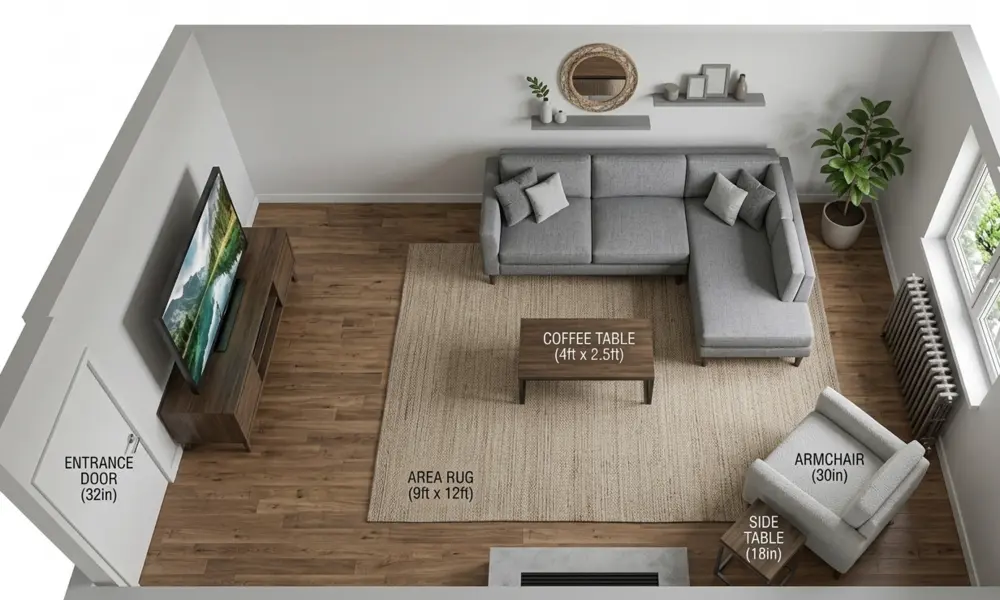
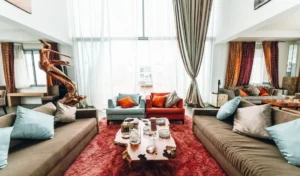
Buying a rug small “to leave more floor showing” is the single most common mistake in small living rooms, and it works backward. The reason is about ratio, not taste: a rug floating a foot or two away from every piece of furniture reads as a separate object placed in the room, while a rug the furniture actually sits on reads as the floor of a defined zone. Your eye doesn’t measure a room’s total square footage to decide if it feels big or small; it measures the size of the largest defined shape in it. A too-small rug just gives it a smaller shape to measure. An 8×10 rug, sized so every sofa and chair leg sits on it, is usually the minimum for a small living room, not the maximum — and if the room is closer to a square than a rectangle, sizing up to 9×12 usually looks more correct than 8×10, since a square rug in a square room tends to read as a stamp rather than a floor. If a wool rug that size is too much money, a plain jute or sisal base at that size, with a smaller patterned runner layered over part of it, gets you almost the same effect for less — jute is also the more practical choice with pets or kids, since wool shows stains and wear in high-traffic zones that jute mostly hides.
Leave 12 to 18 inches of bare floor between the rug’s edge and the wall. That gap is what makes it look chosen rather than just placed.
Curtains: Two Inches, Not Wall-to-Window
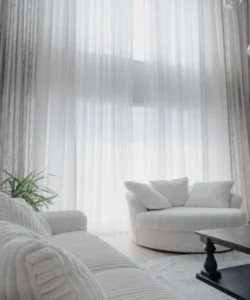
Most curtain rods get mounted directly above the window frame, which is exactly where the eye stops instead of continuing up the wall. Move the rod up to within about two inches of the ceiling or crown molding, and extend it 10-12 inches past the window frame on each side. Buy 96 or 108-inch panels — anything shorter won’t reach. Iron them with starch after washing; cheap linen-blend curtains from a big-box store hold a crisp fold almost as well as expensive custom drapery once they’re pressed properly, which is honestly most of what you’re paying for with “custom.” Linen looks the most expensive of the affordable options but lets in more light and offers less privacy at night, so a ground-floor apartment facing a street usually needs a blackout liner behind it regardless of how the front fabric looks; an upper floor with no direct sightline can skip the liner and keep the airier look.
One Ceiling Light Is Not Enough, Full Stop
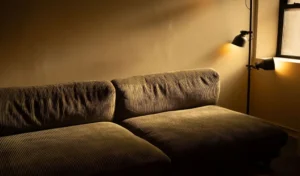
Here’s a test: turn off every light in your living room except the main overhead fixture. If the room looks flat and a little sterile, that’s why — a single overhead source removes every shadow, and shadows are what make a room feel like it has dimension instead of just square footage. Add a floor lamp in whichever corner is darkest, a table lamp somewhere at seating height, and one small accent light on a shelf. Match the bulbs to around 2700K warm white across all three; mismatched color temperatures are more noticeable than most people expect once you know to look for it, and it’s the single most common reason a room with “enough” lamps still looks slightly off. North-facing rooms, which get cooler, flatter daylight all day, need this the most — a room with a lot of south-facing sun can get away with slightly cooler bulbs since natural light is already doing warm work for most of the day. Plug-in wall sconces on either side of the sofa are the cheapest way to add a fourth point of light without an electrician.
Pick One Big Piece of Art, Not Five Small Ones
A gallery wall needs more clear wall space than most small living rooms actually have. Below a certain square footage, five small frames just crowd each other instead of forming a composition. One piece, at least 36×48 inches, above the sofa does more with less — a cheap digital download stretched onto canvas at that size, or printed and mounted in an oversized poster frame with the plastic front removed, both work fine. The plastic is the part that gives away a cheap frame; take it off and mount the print directly.
Mix Textures the Way You’d Mix Foods on a Plate
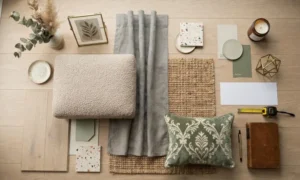
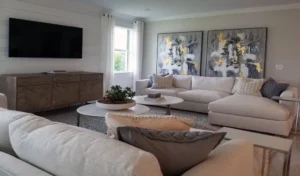
Velvet, bouclé, and something metal — brass or matte black — sitting next to each other catch light three different ways instead of one flat way, which is most of what “layered” actually means when a designer says it. Buy plain down-alternative inserts and cheaper velvet or linen covers rather than pre-stuffed pillows, and buy the insert two inches larger than the cover — a 22-inch insert for a 20-inch cover, for example — so it stays plump instead of going flat within a few weeks, which is what happens to most pre-stuffed pillows regardless of price. Velvet holds up better on a sofa arm where hands rest constantly; linen breathes better and suits a warmer climate or a room that gets direct afternoon sun, since velvet can trap heat in a way that’s noticeable by mid-summer.
Stop Painting the Trim White
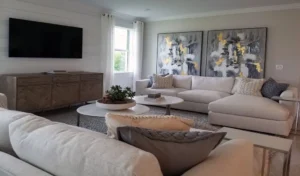
White trim against a colored wall creates a hard line your eye keeps tripping over. Painting the walls, baseboards, and trim the same color — a technique sometimes called color drenching — removes that line entirely, and the corners of the room disappear into soft shadow instead of standing out as edges. Use eggshell on the walls and satin on the trim in the exact same color; the sheen difference is enough detail without breaking the effect. For a fuller breakdown of which shades actually do this well in different light, I wrote a longer piece on paint colors that make a small living room look bigger.
Group Small Objects in Threes, Then Take Some Away
A coffee table with twelve small things on it looks cluttered no matter how nice each individual object is. Three, at different heights — a tall vase, a stack of two or three books, one small object like a brass tray — reads as a decision rather than an accumulation. If you’re not sure whether you have too much, you probably do; remove about a third of what’s currently out and see if you miss it. Most people don’t.
Change the Legs and Hardware Before You Change the Furniture
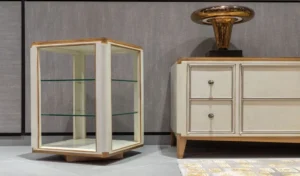
Cheap furniture usually gives itself away at the edges — plastic legs, stamped drawer pulls, a thin silver track on a media cabinet — not in the middle. Swapping tapered wood legs onto an existing sofa base, or brushed brass pulls onto a plain cabinet, takes about ten minutes per piece and changes how the whole item reads without replacing it. A can of matte black spray paint on any exposed metal hinges or tracks does something similar for almost nothing.
What Changes If You’re Renting
Most of the eight ideas above hold up fine in a rental, but two of them need a workaround, and it’s worth being specific about which ones.
Curtain rods are usually fine — most leases allow small nail holes for a rod bracket, and if yours doesn’t, tension rods that wedge between the wall or window frame skip drilling entirely, though they hold less weight, so stick to lighter linen panels rather than heavy blackout fabric. The color-drenching paint idea is the one that actually stops most renters, since a lot of leases either forbid painting or require repainting white before move-out, which erases the whole point. Removable wallpaper in a warm, matte tone gets closer to the same effect without violating a lease, and it comes off cleanly if you’re careful pulling it at a low angle rather than straight out from the wall. For hanging the large art piece, use strip-style adhesive hooks rated for the frame’s actual weight rather than a single nail — most popcorn-ceiling and rental-wall surfaces hold a properly rated strip far better than they hold a nail anyway, since the plaster or drywall in older buildings tends to crumble around small holes.
The lighting and rug fixes need no workaround at all. Floor lamps, table lamps, and a rug are entirely portable, which is probably why they matter this much in the first place — they’re the two changes nobody’s lease can stop you from making.
Taking This Into Fall Without Buying a Second Set of Decor
Pinterest saves for living room content spike hard every August and September, and this year the pattern is sharper than usual — “living room inspo” searches are up in the thousands of percent year over year, and “cozy fall decor” along with broader fall home decor searches are climbing weekly on top of that. What that data actually tells you, though, isn’t “buy fall decor.” It’s that people are searching for how to adjust a room they already like, not replace it.
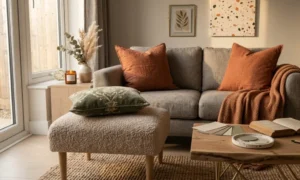
That’s good news if you’ve already done the six items above, because the fall version of this room is three swaps, not a new shopping list. Change the pillow covers from whatever you’re running now to a bouclé or chunky-knit cover in rust, terracotta, or a deep olive — the inserts you already bought are two inches larger than the cover, so this only costs the covers themselves. Drape one heavier throw over the arm of the sofa instead of folding it on the back; draped looks more casual and more considered at the same time, which sounds contradictory until you actually try it. And in your object cluster of three, swap one item for a short grouping of pillar candles at different heights — real or battery, it doesn’t matter much from across the room.
None of that touches the rug, the lighting, the art, or the paint. Those don’t need a season.
Mistakes That Undo All of This
- Pushing every piece against the wall. It leaves a dead space in the middle of the room and makes conversation feel like it’s happening across a gap. Pull the seating in a few inches, even six, and the room feels like a room instead of a waiting area.
- Buying furniture that’s too small for the room. This is the opposite mistake to the one I made with the rug, and it’s just as common — people assume small furniture will make a small room feel bigger, when a single properly sized sofa almost always looks better than two undersized pieces crowded together.
- Leaving the ceiling completely ignored. If your only tall element is the ceiling itself, the room feels squat. A tall bookcase, curtains hung high, or one piece of vertical art fixes this without adding floor space you don’t have. If your layout doesn’t give you an obvious wall to build around, the guide on arranging a room without a TV wall covers how to choose a focal point instead.
- Buying the matching three-piece set. A sofa, loveseat, and armchair from the same collection looks like a showroom display. A vintage chair next to a newer sofa looks like a home that’s been lived in and chosen over time, which is the thing people actually mean when they say a space looks expensive.
Questions People Actually Ask
What should I fix first?
Layout and rug size, before any new decor. Move your existing furniture into a proper conversation arrangement and get the rug sized correctly first — most of what people think is a “decor problem” is actually a layout problem that new pillows won’t solve.
What does a real budget update cost?
Between $300 and $800 for a rug, curtains, paint, and a few lamps, depending on how much of your current furniture stays. Shopping vintage for the art and hardware, or doing paint and lighting first and textiles later, brings that down further.
What colors actually make a small room look bigger?
Warm off-whites and soft taupe bounce light well and feel airy rather than boxed in. Deep charcoal or forest green does something different but similarly effective — it blurs the room’s edges into shadow instead of highlighting them. What backfires most often is a stark, cool-toned white; it looks sterile and tends to draw attention to uneven trim or visible seams rather than hide them.
How do I arrange furniture in a very small room?
Pick one focal point — a window, fireplace, or TV — and face your main seating toward it. Size the rug to that seating group, and keep a 30 to 36-inch walkway clear, even if that means the sofa ends up a few inches off the wall. The layout and proportion guide goes through the exact spacing for different room shapes.
Where do I actually find this stuff cheap?
Big-box stores for the basics — curtains, pillow inserts, plain lamps. Estate sales and local thrift stores for anything that needs to look collected rather than bought yesterday: solid wood frames, brass, older rugs.
Can dark furniture work in a small space?
Yes, if the rest of the room is light enough to balance it. A dark sofa against pale walls with good ambient lighting and some reflective metal looks intentional. The same dark sofa in a dark room with one overhead light just looks heavy.
The Short Version
Fix scale before you fix decor: rug, sofa, and curtain height first. Replace the single overhead light with three warm ones. Pick one large art piece instead of several small ones, and stop buying matching furniture sets. Everything else on this list is a variation on those four ideas — get those right and the room stops looking small and starts looking chosen.