Small Backyard & Patio Privacy Ideas That Actually Work
Small backyard privacy is usually the first thing people search for the moment a patio starts feeling too exposed, and a fence is the obvious first move — but it isn’t always the fix the problem actually needs. The University of Tennessee’s agriculture extension has real numbers on this: roughly two feet of plant width can cut noise by about four decibels, and layering two or three rows of dense shrubs pushes that reduction further — a measurable drop in traffic noise or a chatty neighbor, not just an “out of sight, out of mind” trick.
That distinction matters because most online privacy advice only thinks about blocking a view. A tall fence stops a neighbor from seeing you sunbathe. It does almost nothing for their dog barking at 6am. Adding real privacy to a small backyard or patio — the kind that makes it actually feel like your own space — usually needs both a sightline blocker and a sound absorber, and they’re not always the same structure.
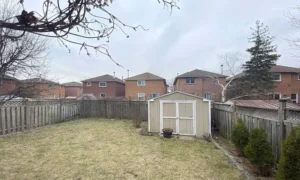
Figure Out What You’re Actually Blocking
Before buying a single fence panel, get specific about the problem. “I want privacy” covers three very different situations, and each one points toward a different fix.
A Direct Sightline From a Neighbor’s Window or Second Floor
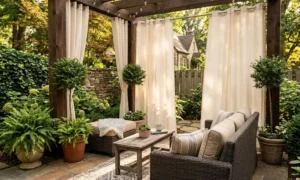
This needs height more than density. A neighbor looking down from a second-story window sees over most standard hedges, so the fix usually involves a pergola with retractable outdoor curtains, or a tall, narrow planting like arborvitae positioned specifically to block that one angle.
Street-Level Passersby or a Busy Sidewalk
Ground-level privacy screens do most of the work here. Garden fencing, lattice panels, or a mid-height hedge along the property line handles this without needing the height an upstairs sightline demands.
Noise More Than Visibility
This is where a fence alone tends to disappoint people. Solid wood or vinyl fencing reflects sound rather than absorbing it, which can occasionally make a noise problem feel louder in the wrong spot. Dense, layered plant hedges absorb far more than they reflect — plants with lots of leaf surface area are genuinely better at this than a flat panel.
Garden Fencing: The Fastest Way to Add Backyard Privacy
For most small backyards, a fence remains the fastest way to establish a hard privacy boundary. It just needs to be the right height and style for what you’re actually solving.
Six feet is the standard privacy-fence height in a lot of residential zones, though this varies enough by city and HOA that it’s worth confirming with your local permitting office before ordering materials — cheaper to make one phone call than to find out after installation that you’re two inches over the limit. Front-yard fencing usually caps lower, often around four feet, since most municipalities don’t want a solid wall facing the street. Rules like this differ enough from one neighborhood to the next that assuming your last address’s limit still applies is a common, avoidable mistake.
Solid panel fencing gives maximum privacy but can make a small yard feel boxed in if it’s the only element used. Board-on-board or shadowbox styles let some airflow and light through while still blocking a direct line of sight — often the better call for a genuinely small patio, where a fully solid fence on all sides can start to feel like standing in a container.
Hedges and Privacy Trees Take Longer, Work Better Long-Term
A fence is instant. A hedge is a project. Both have their place, and a lot of well-designed small yards end up using both together rather than picking one.
Fast-growing options like viburnum can add a foot or two of height per year with regular pruning — quick by hedge standards, but still a season or two before it’s doing real work. Boxwood and holly grow slower but hold a denser, more finished shape once established, useful if you’re patient and want something that looks intentional rather than wild.
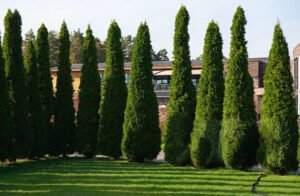
For taller sightline problems, privacy trees like Italian cypress, planted close together, create a living wall effect a hedge alone can’t match in height. They take up more root space than a hedge, so they suit a backyard with some real depth better than a tight patio.
When You Can’t Plant or Build Anything Permanent
Renting changes the whole equation. No digging, no fence installation, sometimes not even permission to attach anything to an existing structure.
Bamboo Barriers and Lattice Panels
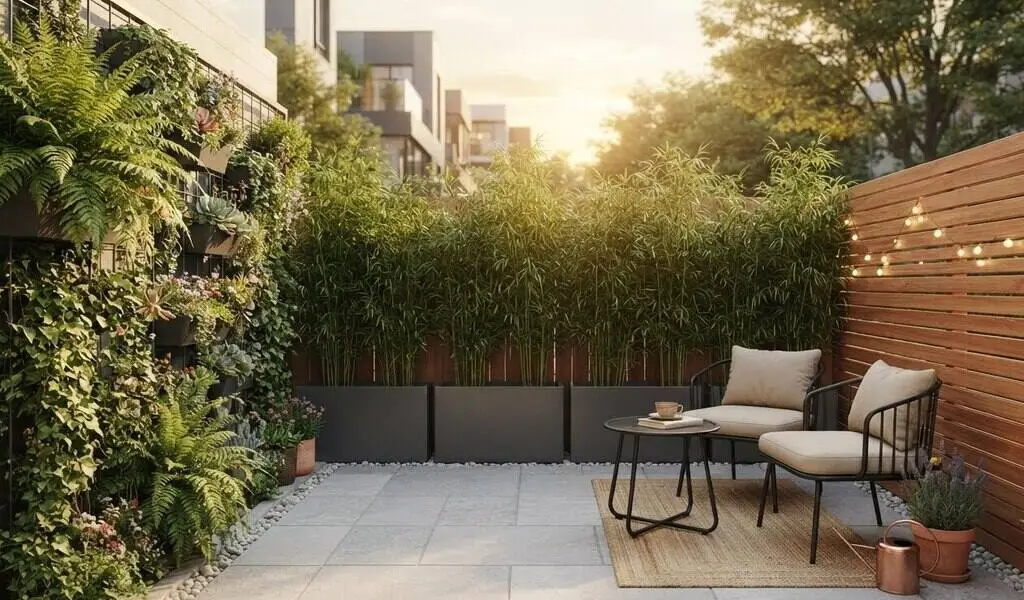
Rolled bamboo barriers attach to an existing railing or a freestanding frame with zip ties or clips — no tools beyond scissors needed to remove them later. Lattice panels do something similar: they block a partial sightline while still letting light through, and a freestanding lattice panel with a weighted base needs nothing more than floor space to work.
Trellises With Climbing Plants
A trellis with climbing plants — jasmine, clematis, or a fast climbing vine suited to your climate — fills in over a season or two and ends up looking far more intentional than a bare screen. It’s also one of the few privacy solutions that gets better looking over time instead of just holding steady.
Outdoor Curtains
Weather-resistant outdoor curtains hung from a tension rod between two posts solve the “I need privacy sometimes, not always” problem better than almost anything else here. Open during the day for light and airflow, closed in the evening when you actually want the screen.
If you’re working with a small rented patio and want the full picture on furniture and layout alongside privacy, our guide to small balcony and patio furniture and layout covers scale and placement in more depth — this article stays focused on the screening side.
Raised Garden Beds Can Double as a Soft Barrier
This one surprises people. A raised garden bed placed along the edge of a patio or yard doesn’t block a sightline the way a fence does, but it changes how a space reads — it defines an edge, adds height through the plants growing in it, and does actual gardening work at the same time.
Stack the height with taller plantings toward the back of the bed and it starts functioning as a partial screen, especially combined with a lower fence or lattice behind it. It won’t replace a real privacy fence for a direct sightline problem, but as a secondary layer softening a hard boundary, it earns its footprint twice over.
Layering Beats Picking Just One — Unless Your Space Can’t Hold It
The most effective small backyard and patio privacy setups rarely rely on a single element. A fence blocks the direct view. A hedge or line of privacy trees planted just behind it adds the sound absorption the fence alone can’t provide. A trellis with climbing plants softens the fence’s flat surface into something that looks designed rather than installed. This layering also solves the instant-versus-long-term tension: the fence gives you privacy on day one, and the hedge catches up a season or two later.
None of that holds up on a genuinely tight footprint, though. Cramming a six-foot fence, a dense hedge, and a row of trees onto a 10-by-12 patio just isn’t realistic. In that situation, pick one primary method and let it do most of the work — a single tall lattice panel with a climbing vine, positioned to block the worst sightline, usually beats layering three half-committed solutions into a space that can’t hold all of them. Outdoor curtains are particularly good here since they take up almost no floor space when open.
If pets are part of the picture too, privacy screening and pet containment aren’t the same project — a hedge that blocks a view doesn’t necessarily stop a dog from squeezing through a gap at the base. Our guide on pet-friendly backyard and patio design covers fencing built specifically around keeping pets secure.
Backyard & Patio Privacy Ideas at a Glance
| Method | Speed | Rental-Friendly | Blocks Sight, Sound, or Both |
|---|---|---|---|
| Solid privacy fence | Instant | No | Sight (reflects sound) |
| Board-on-board / shadowbox fence | Instant | No | Sight, with airflow |
| Dense layered hedge | 1–3 seasons | No | Both |
| Privacy trees (e.g. Italian cypress) | Multiple seasons | No | Sight, tall angles |
| Bamboo barrier / lattice panel | Instant | Yes | Sight (partial) |
| Trellis with climbing plant | 1–2 seasons | Yes | Sight, softens over time |
| Outdoor curtains | Instant | Yes | Sight, on-demand |
| Raised garden bed | 1–2 seasons | Depends on setup | Partial, secondary layer |
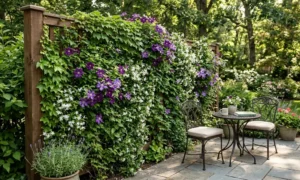
Figure out which sightline actually bothers you most before buying anything — a second-floor window, the sidewalk, or the noise itself are three different problems with three different fixes, and most wasted budget on backyard privacy comes from solving the wrong one. Start there, and build outward only as far as your space and your lease actually allow.