How to Keep a Small Balcony Cool and Shaded in Peak Summer Heat (When the Weather App Lies About How Hot It Really Is)
Check the weather app on a scorching afternoon and it’ll say something like 92°F. Step onto a small, unshaded balcony at that exact moment, and it feels nowhere close to 92. It feels like standing on a stovetop. That gap between the number on your phone and what your skin is reporting isn’t your imagination, and it isn’t really about air temperature at all.
When I started messing around with my own outdoor space back in 2020, this was the first thing that confused me. I’d water the plants, string up some lights, do everything the decor guides said, and the balcony was still borderline unusable by 3pm every day. I was solving the wrong problem. Styling was never going to fix it. The real issue was radiant heat, not temperature, and almost nothing I’d read at the time bothered to explain the difference.
That gap is what this guide is about — how to keep a small balcony cool and shaded in peak summer heat, using the mechanism behind why balconies overheat in the first place, not just a list of products to buy.
Why the Weather App Number Doesn’t Match What You Feel
Air temperature and surface temperature are two completely different measurements, and a balcony makes the gap between them obvious in a way most rooms in a house never do. Nobody warns you about this part when you’re picking out cushions.
Concrete, tile, and metal railings all absorb solar radiation throughout the day and then radiate that stored heat back out, on top of whatever the air temperature already is. Multiple sources measuring this — including a real-world shade study comparing exposed and shaded surfaces — consistently put sun-exposed concrete somewhere between 20 and 40 degrees hotter than the surrounding air, depending on the material and how long it’s been baking. A railing gets even hotter than the floor. Metal absorbs and releases heat faster than almost anything else out there, which is why grabbing one after it’s sat in the sun for an hour is its own small mistake you only make once.
That’s why a balcony can feel worse at 5pm than it did at noon, even as the air itself starts cooling down. The floor and railing are still radiating out heat they soaked up hours earlier. Fixing that means addressing the surfaces themselves, not just the air above them — which is exactly where most balcony decor advice quietly stops short.
The Order This Needs to Happen In
Block the sun first. Everything else is secondary, and doing them out of order wastes money.
There’s a specific reason for that sequence. Shading a balcony after the floor has already spent hours in direct sun does very little — the material has already absorbed the heat, and shade at that point just slows the release rather than preventing the absorption in the first place. Get shade up before the sun hits the surface directly, ideally covering the hottest stretch of the day, and the floor and railing simply never reach those extreme surface temperatures to begin with.
This is also why a shade sail or umbrella consistently beats a fan or a misting system as a first move. Moving air feels pleasant enough. It does nothing about the radiant heat still pouring off a scorching floor, though. Fix the source first, then layer in the extras.
What Blocking the Sun Actually Looks Like
A shade sail mounted on the sun-facing side, angled to intercept direct light before it reaches the floor, is consistently the highest-impact single change available. Research on shade structures generally finds surface temperatures underneath drop somewhere in the range of 15 to 20 degrees Fahrenheit compared to fully exposed concrete — sometimes more, depending on the material and how dense the shade fabric is.
A cantilever or clamp-on umbrella does something similar without any drilling, which matters if the balcony belongs to a rented apartment rather than an owned one. Clamp bases grip directly onto the railing and come off without leaving a mark, which puts it firmly in rental-friendly territory alongside the kind of no-permanent-changes approach that works for most small outdoor spaces — test it out before committing to anything more permanent.
Overhead shade only solves half the problem, though. When the sun sits low in the sky — early morning or late afternoon — it comes in sideways, under most overhead sails and awnings entirely. A bamboo or reed screen mounted on whichever side takes the worst of that low-angle sun catches what the overhead shade misses. Balconies that only shade from above and skip the side almost always still overheat during those low-sun hours, and it’s usually the side shade people forget until they’ve already spent money on the overhead piece.
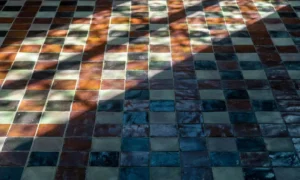
The Floor Is Still a Problem, Even in the Shade
Dark surfaces absorb more solar energy than light ones. Basic physics, and it’s easy to underestimate just how much of a difference it makes on something as small as a balcony floor — I certainly did, for an embarrassingly long time.
Interlocking deck tiles in a light color, laid straight over the existing tile or bare concrete, reflect a meaningful amount of heat that dark or bare flooring would otherwise soak up. They need no installation — they just sit there — which makes this one of the lowest-effort, highest-payoff changes on the whole list. A light-colored outdoor rug does a smaller version of the same job for less money, though it won’t outperform real deck tiles in direct sun for long stretches.
Furniture material matters here too, and it’s the part people notice the hard way. Metal chairs and tables heat up fast in direct sun and stay hot well after the sun’s moved past them. Sitting down on one after it’s spent an afternoon baking is its own small punishment — ask anyone who’s done it once. Rattan, resin, and fabric-covered furniture simply don’t hold heat the same way, which makes them the better call for anything you’re planning to touch or sit on.
Plants Aren’t Dying From Lack of Water — They’re Dying From Radiant Heat
This one genuinely threw me the first summer I tried keeping anything alive out there. Watering on schedule, checking the soil, doing everything right by the book — and the plants still wilted by mid-afternoon anyway. The obvious assumption was not enough water. That assumption was wrong, and it took me embarrassingly long to figure out why.
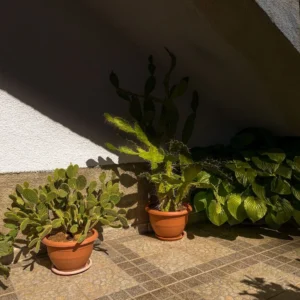
Heat radiating off the floor and railing dries out soil from underneath and the sides, not just from evaporation off the top where watering reaches. A pot sitting near the railing edge, where reflected heat is strongest, can lose moisture faster than a normal watering schedule replaces it, no matter how carefully you’re watering. Moving pots away from the railing edge and closer to the wall or floor center, out of that reflected-heat zone, makes a noticeable difference within a week or two — which is exactly what finally fixed it for me, long after I’d given up blaming the watering can.
Pot material plays a role too. Dark plastic pots absorb heat directly and can get hot enough to stress or damage roots even when the soil itself looks fine on the surface. Light-colored or ceramic pots run cooler. A thin layer of mulch or pebbles on top of the soil slows evaporation further, and watering early in the morning instead of midday gives the moisture time to reach the roots before the day’s heat starts pulling it back out.
The Small Stuff Only Matters Once the Big Stuff Is Handled
A small outdoor-rated fan does more than it sounds like it should, but only after direct sun is already blocked. Moving air across an already-shaded space makes it feel noticeably cooler through evaporative cooling on skin — the same reason a fan feels pointless in direct sun but genuinely pleasant in shade.
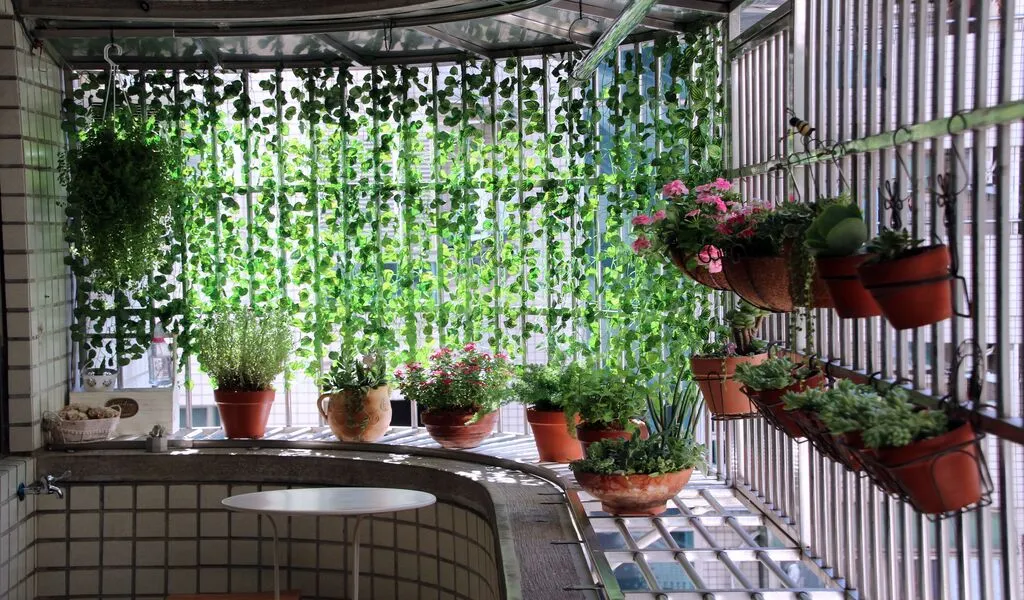
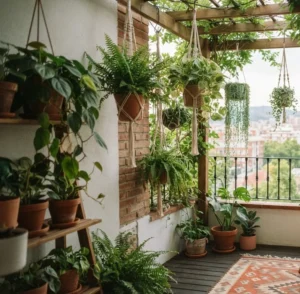
Hanging plants along whichever side gets the most shade add a small amount of natural cooling through evapotranspiration, and they do it without eating into floor space that’s already limited. Fabric choice for cushions follows the same dark-versus-light logic as the flooring — a heavy, dark outdoor fabric holds onto heat the same way dark tile does, so lighter, breathable material stays more comfortable to sit on.
None of these small additions do much on their own. Layered on top of shade that’s already blocking direct sun and a floor that’s already reflecting rather than absorbing, they’re the difference between a balcony that’s merely usable and one that’s genuinely pleasant to sit on for more than five minutes. Once the heat problem is handled, the styling side of things — the part most summer decor guides jump straight to — finally gets to matter, instead of sitting unused under a hot sky.
Getting the Order Right the First Time
Shade first, floor second, plants and furniture third, small extras last. Skip straight to the fan-and-cushions stage without addressing the floor and railing underneath, and the balcony stays uncomfortable no matter how nice it looks in photos.
My own balcony from 2020 had all the styling and none of the actual fix — string lights, a decent rug, plants I kept apologizing to. It looked fine in a photo and was miserable to sit on by early afternoon. Fixing the radiant heat problem first is what changes whether a small balcony gets used all summer, or just decorated and quietly avoided until October rolls around. That’s really the whole difference between decor advice and knowing how to keep a small balcony cool and shaded in peak summer heat.